


2026 Best ASTM A269 304 Coiled Pipe Suppliers?
Choosing the right Astm A269 304 Coiled Pipe supplier requires more than comparing prices or polished websites. Buyers need evidence of consistent metallurgy, accurate dimensions, clean surfaces, and dependable delivery. A reliable supplier should provide ASTM A269 compliance records, heat numbers, mill certificates, and traceable inspection data. These details matter when coiled tubing enters heat exchangers, instrumentation systems, food-processing lines, or demanding industrial environments.
Materials engineer Dr. Elena Marquez explains, “A coiled pipe is only as reliable as its traceability, forming control, and final inspection.” Her observation offers a useful standard for reviewing the 2026 supplier market. Strong manufacturers should control strip quality, welding parameters, annealing, coiling tension, and end preparation. They should also explain testing methods clearly. Hydrostatic testing, eddy-current testing, dimensional checks, and surface inspection can reveal problems before shipment.
Small details often decide performance. A coil with uneven winding may create installation delays. Poor documentation can slow approval. Inconsistent wall thickness can complicate bending. Buyers should ask for sample reports, production photographs, lead-time commitments, and references from comparable industries.
However, no supplier ranking is perfect. Some companies publish limited technical information. Others use broad claims without showing supporting records. That weakness deserves attention. Our evaluation therefore considers documented quality, engineering support, production experience, customization, communication, and after-sales responsibility. The best suppliers are not always the cheapest. They are the ones that make quality visible, measurable, and repeatable.
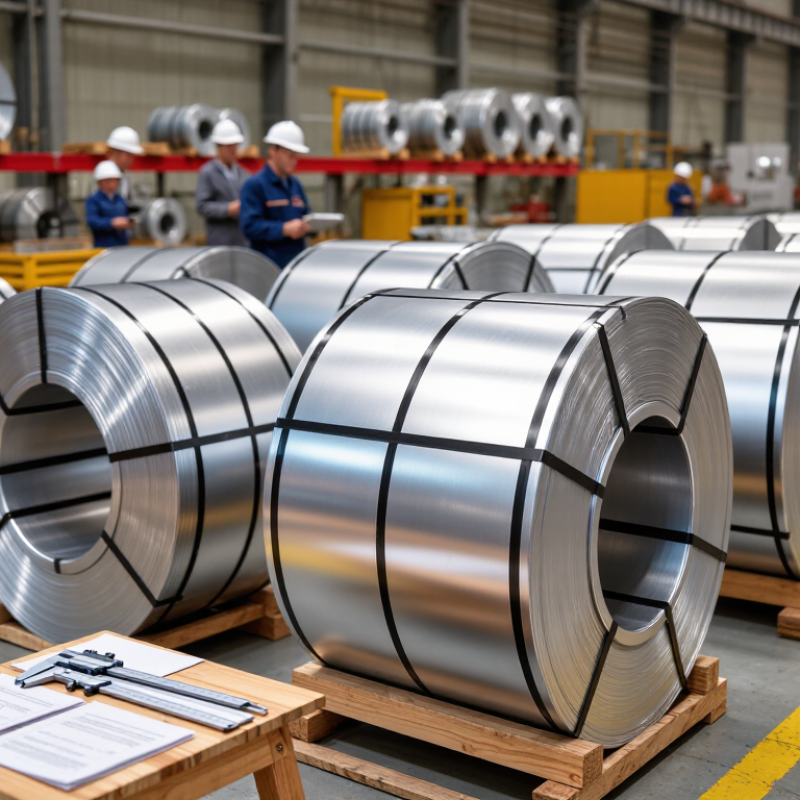
ASTM A269 304 Coiled Pipe: Definition and Main Applications
ASTM A269 304 coiled pipe is a continuous-length tube made from 304 austenitic stainless steel. ASTM A269 covers seamless and welded tubing for general corrosion-resistant service. Coiling reduces connection points and supports longer, cleaner installation routes. It also simplifies storage and transport on a controlled reel.
The material performs well in water, air, mild chemicals, and many food-processing environments. Common uses include instrumentation lines, heat exchangers, sampling systems, pneumatic controls, and compact fluid circuits. A technician can route the tubing around equipment without adding many elbows. That saves space.
304 is not a universal solution. It can suffer in chloride-rich conditions, especially where moisture remains trapped. For seawater or aggressive chemical exposure, another alloy may be more suitable. This point is often overlooked. Surface finish, wall thickness, weld quality, dimensional tolerance, and pressure requirements also need review. ASTM A269 compliance alone may not satisfy every hygienic or process standard. In practice, reliable suppliers should provide material certificates, heat numbers, inspection records, and clear information about coil length. Buyers should also confirm whether the tubing is annealed, polished, capped, and tested for the intended service. Small details matter.
2026 Best ASTM A269 304 Coiled Pipe Suppliers? – ASTM A269 304 Coiled Pipe: Definition and Main Applications
| Evaluation Dimension | ASTM A269 304 Coiled Pipe Information | Why It Matters When Selecting a Supplier |
|---|---|---|
| Product definition | Austenitic stainless steel tubing supplied in a continuous coil for general corrosive-service and low- or high-temperature applications. | The supplier should clearly identify the product as tubing or pipe, state the manufacturing route, and provide traceable material documentation. |
| Applicable standard | ASTM A269/A269M covers seamless and welded austenitic stainless steel tubing for general service. The applicable edition and purchase specification should be stated on the order. | A valid certificate should reference ASTM A269/A269M and show compliance with the ordered dimensions, heat treatment, testing, and chemical requirements. |
| Common grade designation | 304 stainless steel, commonly identified as UNS S30400. Equivalent designations include EN 1.4301 and X5CrNi18-10, subject to specification equivalence. | Confirm that the grade designation on the quotation, marking, test certificate, and inspection documents is consistent. |
| Typical chemical composition of 304 | Typical maximum or specified ranges include carbon ≤0.08%, manganese ≤2.00%, silicon ≤1.00%, phosphorus ≤0.045%, sulfur ≤0.030%, chromium 18.00–20.00%, and nickel 8.00–11.00%. | The mill test certificate should report heat-level chemistry rather than only listing the nominal grade. |
| Minimum mechanical properties | For commonly specified 304 tubing, minimum values are approximately 515 MPa tensile strength, 205 MPa yield strength, and 35% elongation; the exact requirement depends on the applicable specification and product condition. | Ask for mechanical-test results tied to the heat or production lot and verify the test direction and specimen requirements. |
| Manufacturing route | Coiled tubing may be produced as welded or seamless tubing. Welded tubing is commonly selected for long continuous lengths, while seamless tubing is used where a weld-free construction is required. | The route affects cost, available dimensions, inspection requirements, bendability, and suitability for the service environment. |
| Outside diameter | Available outside diameters are project- and mill-dependent. Small-bore coiled tubing is commonly offered in sizes from approximately 3 mm to 25.4 mm OD, with larger sizes available by special arrangement. | The quotation should state OD tolerance, measurement method, and whether the dimension is specified in millimetres or inches. |
| Wall thickness | Common coiled-tubing wall thicknesses are approximately 0.5–3.0 mm, although the practical range depends on OD, manufacturing route, pressure rating, and forming capability. | Confirm nominal wall, minimum wall, tolerance, and the design pressure calculation before placing an order. |
| Coil length | Continuous lengths commonly range from several metres to hundreds of metres. The maximum length depends on OD, wall thickness, coil weight, transport limits, and production equipment. | A suitable supplier should confirm maximum single-length capability, allowable weld joints, coil weight, and minimum inside coil diameter. |
| Surface finish | Common finishes include bright annealed, solution annealed, pickled, and mechanically polished surfaces. Surface requirements are normally purchase-specific rather than fixed by the grade alone. | Finish affects cleanliness, corrosion performance, friction, appearance, and suitability for instrumentation or hygienic service. |
| Heat treatment | Solution annealing is commonly used for austenitic stainless tubing, followed by rapid cooling when required by the applicable specification. | Request heat-treatment details and verify that the condition supports the required corrosion resistance and forming performance. |
| Required testing | Typical requirements may include chemical analysis, tensile testing, dimensional inspection, hydrostatic or nondestructive electric testing, and additional tests specified by the purchase order. | Testing should be agreed before production because pressure, eddy-current, ultrasonic, or special cleanliness requirements can affect price and lead time. |
| Corrosion resistance | 304 provides good general atmospheric and mildly corrosive-service resistance. It is less resistant to chloride-induced pitting and crevice corrosion than molybdenum-bearing grades such as 316. | For seawater, concentrated chlorides, or warm chloride service, the design review should consider whether 304 is adequate. |
| Main applications | Instrumentation lines, heat exchangers, condensers, process-control systems, compressed-air lines, food-processing equipment, water-treatment systems, and general chemical-service tubing. | Application details should include fluid composition, temperature, pressure, flow rate, cleanliness, and bending requirements. |
| Documentation package | A typical package includes a material test certificate, dimensional report, heat-treatment record, inspection results, certificate of conformance, packing list, and traceability information. | Complete documentation reduces receiving risk and supports quality audits, regulatory review, and long-term maintenance records. |
| Packaging and delivery | Coils should be protected against deformation, contamination, moisture, and transit damage. End caps, protective wrapping, coil supports, and clear identification are commonly used. | Confirm coil dimensions, gross weight, lifting points, preservation method, delivery terms, and export packing requirements. |
| Supplier selection priorities for 2026 | Prioritize verified ASTM compliance, stable dimensional control, reliable long-length production, documented testing, material traceability, responsive technical support, and consistent delivery performance. | A technically capable supplier should provide a detailed quotation, representative test documents, production capability information, and clear acceptance criteria before order confirmation. |
Note: Dimensional ranges and available coil lengths are typical market indications, not universal ASTM A269 limits. Final requirements should be confirmed against the current ASTM edition, engineering design, purchase order, and applicable local regulations.
Related Posts
-
Top ASTM A269 304 Coil Tube Manufacturers and Suppliers
-
Why Choose ASTM A269 304 Capillary Pipe?
-
10 Best Stainless Steel Coil Tube Options for Your Project Needs?
-
Top 10 316L Coiled Tubing Suppliers Worldwide?
-
Top Stainless Steel Seamless Steel Coiled Pipe Suppliers
-
7 Tips for Buying Stainless Steel Seamless Steel Coiled Pipe
-

Phone
-

E-mail
-

Whatsapp
-

WeChat
WeChat
13295445693
-

Top