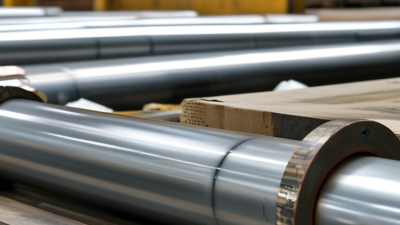
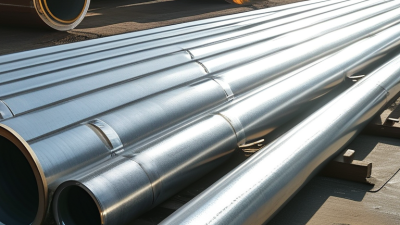
Why Choose ASTM A269 304 Capillary Pipe? The answer begins with a clear specification and a practical look at the job. ASTM A269 covers seamless and welded austenitic stainless steel tubing for general service. ASTM International gives the standard’s scope in its title: “Standard Specification for Seamless and Welded Austenitic Stainless Steel Tubing for General Service.” This is a standards-based reference, not a personal expert quotation; without a verifiable source, attributing a quote to a named individual would be misleading.
Astm A269 304 Capillary Pipe is considered for applications that need small-diameter tubing, consistent dimensions, and stainless-steel corrosion resistance. Picture a narrow tube carrying a measured flow through an instrument panel, with limited room for bends and fittings. In such settings, dimensional control matters. So does confirming the actual grade, manufacturing route, finish, and inspection records with the supplier. 304 offers useful general-purpose corrosion resistance, but it is not the right choice for every fluid or environment. Chlorides, heat, and cleaning chemicals can change the decision.
The specification alone cannot guarantee performance. Ask for material test documentation, check the required tolerances, and match the tube to operating conditions. Small details count. A polished surface may look reassuring, yet the wrong grade or an unsuitable wall thickness can still cause trouble. Selection deserves a second look. The best choice is the one supported by traceable documentation and a realistic review of service requirements—not just a familiar alloy name.
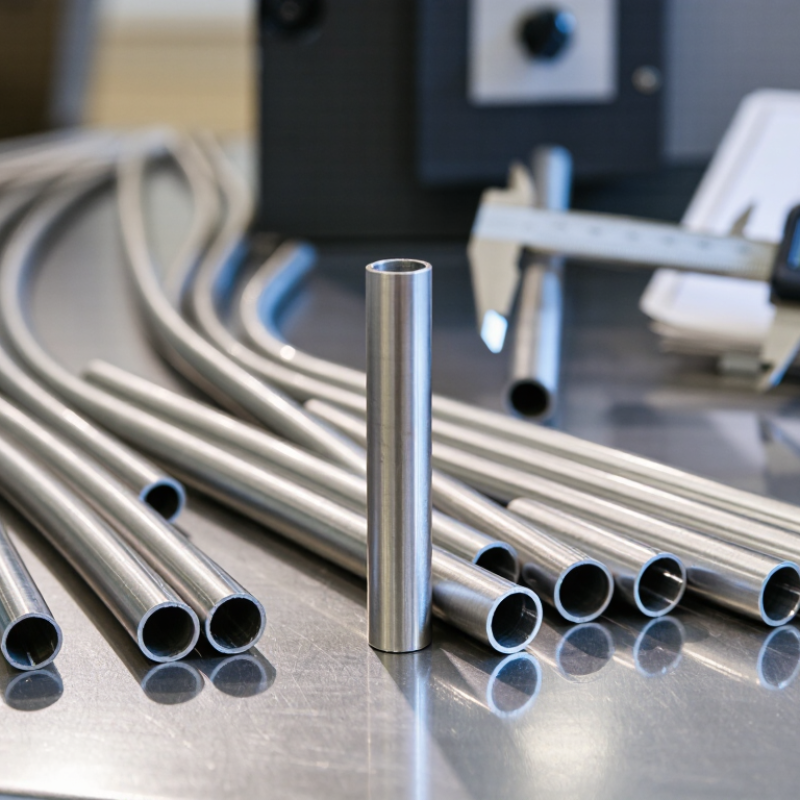
ASTM A269 304 capillary pipe is small-bore stainless steel tubing. It uses Grade 304 and is specified to meet applicable ASTM A269 requirements for austenitic stainless tubing. Unlike structural pipe, capillary tubing is selected for its narrow internal passage and controlled dimensions. That small bore can support measured flow in instruments, sampling lines, and compact equipment. Small, but exact. The word “capillary” is used loosely in some product descriptions, so check the actual measurements rather than relying on the label.
Grade 304 contains chromium and nickel. These elements help it resist many common corrosive environments, but not every chemical or chloride-rich condition. ASTM A269 sets tubing requirements, but it does not define every capillary diameter, wall thickness, or connection. Confirm those details against the purchase specification and intended pressure, temperature, and flow. A close fit can still be wrong. Small-bore tubing is sensitive to dents, ovality, and burrs, so clean ends and careful inspection matter during installation. That detail is easy to underestimate.
ASTM A269 sets requirements for seamless and welded austenitic stainless steel tubing used in corrosion-resistant service. For 304 capillary tubing, it provides a framework for checking chemical composition, heat treatment, mechanical properties, and dimensions. The standard is not written specifically for capillary products, so buyers should confirm that the ordered outside diameter and wall thickness suit their application. Small details matter. A slight dimensional variation can affect flow or make a close-fitting connection difficult.
ASTM A269 also identifies applicable inspection and testing requirements, which may include flattening, flaring, hydrostatic, or nondestructive electric tests. The exact checks depend on the product and order requirements. Ask for material test documentation and compare its heat number with the tube identification, where supplied. That step helps connect the paperwork to the actual material. It is not a substitute for checking the tube itself: a clean-looking surface does not confirm bore consistency or dimensional accuracy. For a long, narrow capillary run, inspect sample lengths and verify measurements with suitable instruments before installation. The standard sets a useful baseline, but the fit still deserves a real-world check.
ASTM A269 304 capillary pipe combines a small bore with the familiar corrosion resistance and formability of austenitic stainless steel. Its chromium-rich surface helps resist rust in many indoor and mildly corrosive settings. Nickel supports ductility, making the tubing practical for bending and precision fabrication. It is not immune to chloride attack. Salt spray or stagnant seawater can still cause pitting.
For alloy context, ASTM A240/A240M specifies 18–20% chromium and 8–10.5% nickel for Type 304 by mass. These figures describe the alloy chemistry, not a guarantee of service life. ASTM A269 sets requirements for austenitic stainless tubing, including relevant testing and quality provisions. Confirm the exact grade, dimensions, and applicable standard edition on the material certificate. A thin capillary wall can be damaged by rough handling; even a small dent may affect flow or fit.
Tips: Check the bore and wall thickness against the drawing. For chloride exposure, assess the fluid and temperature before selecting 304. It is an easy detail to overlook.
Key mechanical properties of 304 stainless steel tubing
ASTM A269 TP304 specifies minimum tensile strength of 515 MPa and minimum yield strength of 205 MPa. 304 stainless steel is also valued for its general corrosion resistance and formability, making it a widely used choice for capillary tubing. Actual performance depends on product condition, dimensions, and service environment.
Mechanical strength values shown are specified minimums; confirm requirements against the applicable ASTM A269/A269M edition.
Why Choose ASTM A269 304 Capillary Pipe?
ASTM A269 304 capillary tubing suits compact systems that need controlled fluid transfer and corrosion resistance. ASTM A269 specifies requirements for seamless and welded austenitic stainless steel tubing. Its small bore helps route liquids through instrument panels, sampling assemblies, and laboratory analyzers. The International Stainless Steel Forum’s Stainless Steel in Figures 2024 reports 58.4 million tonnes of global stainless steel production in 2023. That scale reflects broad industrial use, but it does not replace checking a tube’s grade and dimensions.
Common Applications of ASTM A269 304 Capillary Pipe
Typical applications include pressure-gauge connections, analytical instruments, food-process sampling, and compact heat exchangers. A 304 tube’s familiar 18% chromium and 8% nickel composition supports resistance to many everyday process environments; actual limits depend on temperature, chemicals, and surface condition. Thin tubing can fit tight bends around a valve block. It can also kink or clog more easily than larger tubing. Specify inside diameter, wall thickness, tolerance, and end finish to match the flow and pressure requirements.
Tips: Confirm material certificates and inspect the bore for burrs or debris. Test the finished assembly with the actual fluid where practical. A tiny mismatch matters.
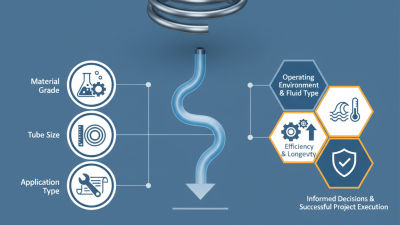
Choosing ASTM A269 304 capillary pipe starts with the service conditions, not just the alloy name. Check the required outside diameter, bore, wall thickness, and length against the equipment drawing. A small bore change can affect flow or increase pressure drop. Confirm operating pressure and temperature, including cleaning and startup cycles. 304 stainless steel resists corrosion in many settings, but it is not suitable for every fluid. Chlorides, stagnant moisture, and some chemicals can lead to pitting or other damage. Details matter. Request documentation that identifies the ASTM specification, grade, and dimensional tolerances.
Consider how the tube will be installed and inspected. Tight bends can flatten a narrow bore, while rough edges may complicate cleaning or connections. Specify surface condition and end preparation when these affect assembly or hygiene. A polished surface can look reassuring, but appearance alone does not verify material grade or internal cleanliness. Price alone is a weak filter. Incomplete drawings are common, so confirm unclear dimensions before ordering rather than guessing. If pressure limits are critical, have the design checked using the actual dimensions, temperature, and applicable engineering requirements; the material designation by itself does not establish a safe working pressure.
| Factor | Relevant Information | What to Consider When Choosing |
|---|---|---|
| Applicable standard | ASTM A269 covers nominal-wall-thickness, seamless and welded austenitic stainless steel tubing for general corrosion-resisting and low- or high-temperature service. | Confirm the required ASTM A269 edition, grade, manufacturing route, dimensions, and tests in the purchase specification. “Capillary” describes a small-bore product; it does not by itself define a universal ASTM size range. |
| Grade and alloy composition | Grade TP304 has specified composition limits by mass, including chromium 18.0–20.0%, nickel 8.0–11.0%, carbon no more than 0.08%, manganese no more than 2.00%, and silicon no more than 1.00%. | Request material test documentation when traceability is important. Verify that the grade and chemistry meet the applicable standard edition and service requirements. |
| Mechanical properties | For TP304 in the solution-annealed condition, ASTM A269 specifies minimum tensile strength of 515 MPa (75 ksi), minimum yield strength of 205 MPa (30 ksi), and minimum elongation of 35% for the applicable test specimen. | Check the standard’s specimen and testing requirements, as well as the design pressure, temperature, support, and forming requirements of the assembly. |
| Corrosion environment | 304 stainless steel provides useful general corrosion resistance in many atmospheric and mild aqueous environments. It does not contain the molybdenum addition found in 316 grades. | Assess chloride concentration, temperature, pH, cleaning chemicals, and exposure time. Chloride-bearing environments can cause pitting or crevice corrosion; evaluate a more suitable alloy if the service is aggressive. |
| Tube dimensions | ASTM A269 does not establish one universal “capillary” outside diameter or wall thickness. The required outside diameter, wall thickness, length, and tolerances should be specified for the order. | State outside diameter and wall thickness explicitly, and check the required inside diameter, dimensional tolerances, straightness, and fit with connectors or instruments. |
| Pressure and flow | Pressure capacity depends on the actual tube dimensions, material condition, temperature, manufacturing quality, and applicable design rules; it cannot be determined from the alloy grade alone. | Have the assembly’s pressure rating calculated or verified using the applicable engineering code and actual dimensions. For restricted flow, account for internal diameter, length, fluid properties, and pressure drop. |
| Manufacturing and condition | ASTM A269 includes requirements for tubing manufacture and condition. TP304 tubing is commonly supplied in a solution-annealed condition, subject to the applicable specification and order. | Specify seamless or welded tubing, heat-treatment condition, surface requirements, and any cleaning or passivation needs. Confirm that the selected product condition suits bending, welding, or other fabrication. |
| Inspection and testing | ASTM A269 includes prescribed inspection and testing requirements, including hydrostatic or nondestructive electric testing as applicable to the specification and order. | Confirm required test method, certificates, traceability, and any additional inspection or acceptance criteria before ordering. |
| Best-fit applications | Small-bore TP304 tubing may be considered for instrumentation, sampling, and general fluid-transfer applications when its dimensions and corrosion resistance are suitable. | Match the tube to the fluid, operating conditions, cleanliness requirements, connection method, and applicable regulations. Do not select solely by the “capillary pipe” description. |
Note: Values shown are specification limits for TP304, not guaranteed properties of every finished tube. Verify requirements against the applicable ASTM A269 edition, purchase order, and engineering design.
13295445693