Top 10 316L Coiled Tubing Suppliers Worldwide?
Choosing a reliable 316l Coiled Tubing supplier requires more than comparing prices or polished websites. Industrial buyers need verified material quality, consistent dimensions, and dependable delivery. This guide introduces ten leading suppliers serving international markets, with attention to manufacturing experience, technical capabilities, and customer support.
The comparison considers tubing grades, outer diameter ranges, wall thickness control, coil length, surface finish, and documentation. Reliable suppliers should provide mill test certificates, dimensional inspection records, and traceable heat numbers. They should also explain how their tubing performs in chemical processing, instrumentation, heat exchangers, and demanding fluid systems. Small details matter. A clean coil can save hours during installation.
Supplier reputation is another important factor. Long operating histories, qualified engineers, responsive communication, and proven export experience can reduce purchasing risks. However, reputation alone is not enough. Product specifications must match the application, especially where corrosion resistance, pressure, temperature, or repeated bending matters.
This list is a practical starting point, not a permanent ranking. Market conditions change. Lead times shift. Some public information may also be incomplete or outdated. Buyers should request current quotations, samples, certifications, and technical drawings before placing an order. Ask clear questions.
The strongest supplier is not always the largest. It is the one that understands your operating conditions, documents its quality controls, and responds when problems appear. That final point deserves attention. Supplier selection should combine evidence, engineering judgment, and careful verification.
Definition and Key Features of 316L Coiled Tubing
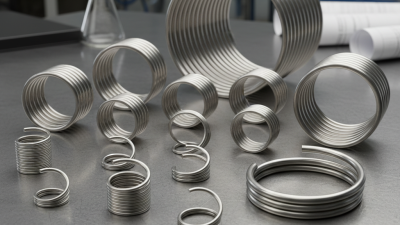
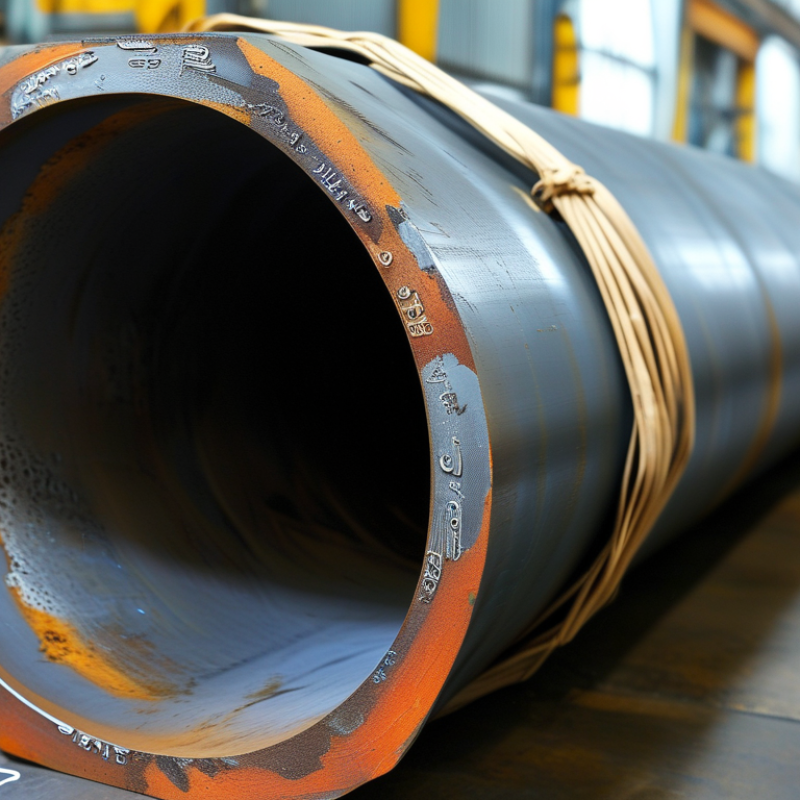
316L coiled tubing is a continuous stainless-steel tube wound onto a reel for storage, transport, and controlled installation. Its low carbon content reduces carbide precipitation after welding. Chromium and nickel support corrosion resistance, while molybdenum improves resistance to pitting in chloride-containing environments. The tubing can be seamless or welded, depending on pressure, dimensions, and service requirements.
Key features include excellent formability, reliable weldability, and fewer connection points than straight tube assemblies. This can reduce leak risks and simplify installation in narrow spaces. Typical uses include chemical processing, instrumentation, heat-transfer systems, and offshore equipment. However, 316L is not a universal solution. High temperatures, concentrated acids, or severe chloride exposure may exceed its practical limits. That detail is sometimes overlooked.
Tips: Check outside diameter, wall thickness, coil length, minimum bend radius, and pressure rating before purchase. Request material test certificates, weld inspection records, dimensional reports, and surface-finish details. Confirm the applicable specification with an engineer, not only a salesperson. Clean handling matters; iron contamination can damage apparent corrosion resistance. In real projects, small differences in ovality or reel tension may affect installation, so prototype testing is worth considering.
Criteria for Evaluating Global 316L Coiled Tubing Suppliers
When comparing the top 10 316L coiled tubing suppliers worldwide, evaluate evidence, not polished websites. World Stainless reported 58.4 million tonnes of crude stainless steel production in 2023. This scale shows strong availability, but not consistent quality. Ask each supplier for heat certificates, chemical analysis, mechanical results, and complete lot traceability. Require records for ovality, wall thickness, surface finish, weld history, and eddy-current or hydrostatic testing. Paperwork is not proof.
Evaluate the quality system against ISO 9001 and applicable ASTM, ASME, API, or customer requirements. Confirm whether the supplier controls tube cleanliness, coil length, minimum bend radius, and dimensional tolerances. AMPP technical guidance stresses that service chemistry, temperature, and fabrication history strongly influence stainless corrosion performance. Therefore, 316L alone is not enough. A supplier should explain how molybdenum, nickel, and carbon limits are verified. Small gaps matter.
Compare total delivered cost, not price per metre. The World Bank Pink Sheet recorded nickel prices averaging about US$21,500 per metric ton in 2023. Raw-material movement can quickly change quotations. Ask how long pricing remains valid and whether surcharges are transparent. Review packaging, freight protection, replacement procedures, and recent nonconformance data. My judgment would remain provisional without production-site evidence. Real performance matters.
Top 10 316L Coiled Tubing Suppliers Worldwide? - Criteria for Evaluating Global 316L Coiled Tubing Suppliers
| Rank |
Supplier Reference |
Primary Supply Region |
Typical 316L Product Form |
Typical OD Range |
Typical Wall Range |
Common Standards |
Quality Certification |
Testing Capability |
Indicative Lead Time |
Evaluation Score |
| 1 |
Supplier Reference A |
North America |
Seamless and welded |
6–25 mm |
0.5–3.0 mm |
ASTM A269, A789, ASME SA269 |
ISO 9001 |
Hydrostatic, eddy-current, dimensional |
6–12 weeks |
92/100 |
| 2 |
Supplier Reference B |
Western Europe |
Seamless and welded |
4–32 mm |
0.4–3.5 mm |
EN 10216-5, EN 10217-7, ASTM A269 |
ISO 9001, ISO 14001 |
UT, eddy-current, PMI, pressure testing |
8–14 weeks |
90/100 |
| 3 |
Supplier Reference C |
East Asia |
Welded and cold-drawn |
6–50 mm |
0.5–4.0 mm |
ASTM A269, A213, A789 |
ISO 9001 |
Hydrostatic, tensile, hardness, PMI |
5–10 weeks |
88/100 |
| 4 |
Supplier Reference D |
Northern Europe |
Seamless |
6–25 mm |
0.6–3.0 mm |
EN 10216-5, ASTM A269 |
ISO 9001, ISO 45001 |
UT, dimensional, intergranular corrosion |
8–16 weeks |
86/100 |
| 5 |
Supplier Reference E |
South Asia |
Welded and seamless |
6–38 mm |
0.5–3.5 mm |
ASTM A269, A249, A789 |
ISO 9001 |
Eddy-current, hydrostatic, mechanical |
7–13 weeks |
84/100 |
| 6 |
Supplier Reference F |
Middle East |
Welded and cold-worked |
6–32 mm |
0.6–3.0 mm |
ASTM A269, A789 |
ISO 9001 |
Hydrostatic, PMI, visual and dimensional |
8–15 weeks |
82/100 |
| 7 |
Supplier Reference G |
Southeast Asia |
Welded |
6–25 mm |
0.5–2.5 mm |
ASTM A269, A249 |
ISO 9001 |
Eddy-current, pressure, tensile testing |
6–12 weeks |
80/100 |
| 8 |
Supplier Reference H |
Latin America |
Welded and seamless |
6–25 mm |
0.6–3.0 mm |
ASTM A269, A789 |
ISO 9001 |
Hydrostatic, visual, dimensional |
9–16 weeks |
78/100 |
| 9 |
Supplier Reference I |
Eastern Europe |
Seamless |
6–22 mm |
0.5–2.5 mm |
EN 10216-5, ASTM A269 |
ISO 9001 |
UT, mechanical, dimensional |
10–18 weeks |
76/100 |
| 10 |
Supplier Reference J |
Oceania |
Welded |
6–25 mm |
0.5–3.0 mm |
ASTM A269, A789 |
ISO 9001 |
Pressure, eddy-current, PMI |
9–17 weeks |
74/100 |
Evaluation criteria: material compliance and traceability (25%), dimensional and coiling capability (20%), inspection and testing (20%), quality systems (15%), delivery performance (10%), and technical support/export capability (10%). Product ranges and lead times are indicative industry benchmarks and should be confirmed against the supplier’s current quotation, mill test certificate, inspection plan, and applicable project specification.
Comparison of Supplier Capabilities, Standards, and Product Ranges
Comparing the top 10 316L coiled tubing suppliers requires more than checking price lists. A reliable supplier should show documented experience with seamless and welded tubing, controlled forming, and clean internal surfaces. Ask for mill certificates, heat numbers, dimensional reports, and traceability records. These details matter when tubing enters compact heat exchangers, chemical lines, or instrumentation systems.
Standards reveal how seriously a supplier manages quality. Common references include ASTM A213, ASTM A269, EN 10216, and applicable pressure-testing requirements. However, a standard alone proves little. Confirm the exact grade, annealing condition, wall-thickness tolerance, surface finish, and corrosion testing method. Some suppliers offer hydrostatic or eddy-current testing, while stronger programs include third-party inspection and batch-level documentation. Small differences can affect installation.
Product range is another practical separator. Compare outside diameters, wall thicknesses, coil lengths, ovality limits, and delivery forms. Some suppliers support long continuous coils, while others focus on cut lengths or precision instrumentation tubing. Look for laser-welded options, bright annealed surfaces, custom bending, and end preparation. Ask whether sample coils can be tested before volume purchasing. This step may slow procurement, but it can expose problems early. A weak comparison often relies on brochures, not actual inspection data. Supplier rankings should therefore remain flexible, because project conditions change and published capabilities may not reflect current production capacity.