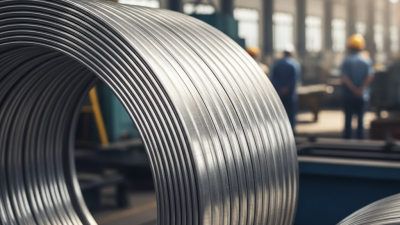
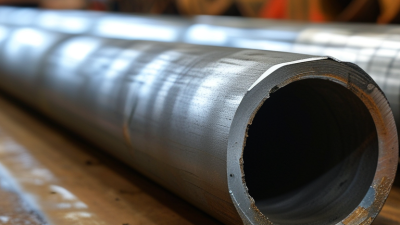
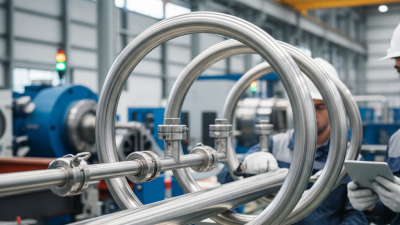
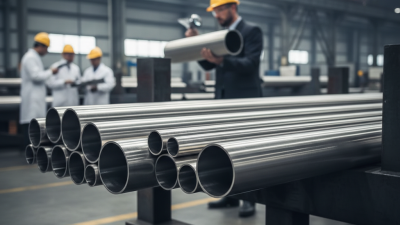
Choosing reliable suppliers for Stainless Steel Seamless Steel Coiled Pipe requires more than comparing prices. These pipes support demanding systems where strength, corrosion resistance, and dimensional accuracy matter. A weak purchasing decision can create leaks, delays, or expensive replacement work. The best suppliers combine proven manufacturing experience with transparent technical documentation.
This guide examines suppliers through practical criteria. These include stainless steel grades, outside diameter control, wall thickness consistency, coil length, surface finish, and pressure performance. It also considers production equipment, heat treatment, non-destructive testing, and material traceability. Certificates should match the delivered batch, not merely describe a company’s general capabilities. That detail matters.
Real project conditions can expose hidden differences. A supplier may offer attractive prices but provide limited support for tight bending radii. Another may produce excellent tubing but struggle with custom packaging or delivery schedules. Experienced buyers should request sample reports, inspection records, and clear tolerance data. Site feedback is valuable, although it is not always complete or unbiased.
There is no universal “top” supplier for every application. A chemical plant, instrumentation project, and offshore installation may require different priorities. Buyers should verify applicable standards and confirm requirements with qualified engineers. Supplier rankings can guide research, but they cannot replace direct technical evaluation. Even this comparison has limits. Market information changes, and published claims need independent checking. The goal is a dependable shortlist, supported by evidence, realistic expectations, and careful communication.
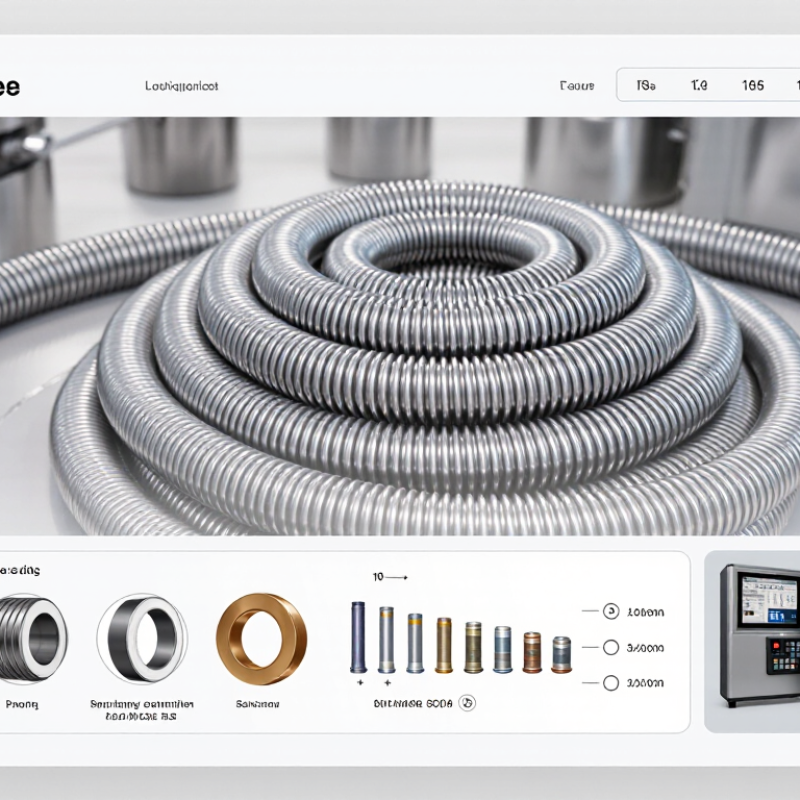
Choosing a stainless steel coiled pipe supplier requires more than comparing prices. The selected grade must fit the fluid, temperature, pressure, and installation environment. Seamless coiled pipe can reduce connection points, which helps limit leakage risks in long continuous runs.
Grade 304 suits many indoor systems, food-processing lines, and general water applications. It offers good corrosion resistance and practical formability. However, salt spray and chloride-rich fluids can challenge it. Grade 316L contains molybdenum, improving resistance to pitting and crevice corrosion. Its low carbon content also supports welded assemblies after proper fabrication. Still, 316L is not immune to every chemical.
Duplex 2205 provides higher strength than 304 and 316L, while offering strong resistance to chloride stress corrosion cracking. It can reduce wall thickness in some pressure designs. This advantage needs engineering verification. Its forming range is narrower, and incorrect heat treatment may damage performance. I have seen specifications fail because buyers checked only the grade, not the manufacturing details.
A reliable supplier should provide heat numbers, material test certificates, dimensional reports, and traceable inspection records. Ask about outside diameter, wall tolerance, coil length, ovality, surface condition, and hydrostatic or eddy-current testing. Also confirm solution annealing and cleaning procedures. Small details matter. A polished surface cannot compensate for poor metallurgical control.
Choosing top stainless steel seamless steel coiled pipe suppliers requires more than comparing prices. Technical standards show how consistently a supplier controls materials, production, and inspection.
ASTM A213 applies to seamless alloy and stainless steel tubes for boilers, superheaters, and heat exchangers. It emphasizes chemical composition, mechanical properties, heat treatment, and testing. ASTM A269 covers seamless and welded austenitic stainless tubing for general corrosion-resistant service. Buyers should confirm whether the order requires seamless construction, because the standard itself may include both forms. ASME SA213 is the pressure-vessel code designation aligned with ASTM A213. The wording matters on regulated equipment.
Ask for heat numbers, material certificates, dimensional reports, and test records. Good traceability should connect each coiled length to its melting batch and inspection results. Hydrostatic or nondestructive testing may apply, depending on the purchase specification. Do not assume every certificate proves the same inspection scope. That assumption causes trouble.
ISO 9001 addresses the quality management system, not the pipe’s grade or pressure rating. A certified supplier should control documents, corrective actions, calibration, and customer requirements. Factory experience matters here. Coiled pipe can develop ovality, surface marks, or uneven winding during handling. A careful supplier checks these details before shipment. Still, no system is flawless. Buyers should review certificates, tolerances, surface condition, and service temperature against the actual application.
| Evaluation Dimension | Typical Requirement or Product Data | Applicable Standard | Common Stainless Steel Grades | Supplier Documentation or Evidence | Purchasing Consideration |
|---|---|---|---|---|---|
| Product Type | Seamless stainless steel coiled tubing manufactured without a longitudinal weld; supplied in continuous coil lengths where production and application requirements permit. | ASTM A213, ASTM A269, ASME SA213 | 304, 304L, 316, 316L, 321, 347, and other specified austenitic grades | Product description, manufacturing route, heat number, inspection certificate | Confirm whether the required standard specifically permits the ordered form, dimensions, and delivery condition. |
| ASTM A213 Application | Seamless ferritic and austenitic alloy-steel boiler, superheater, and heat-exchanger tubes. | ASTM A213 | TP304/304L, TP316/316L, TP321, TP347, and other listed alloy-steel grades | Material test report showing chemical composition, mechanical properties, heat treatment, and required tests | Suitable for heat-transfer and elevated-temperature service when the specified grade and design conditions are appropriate. |
| ASTM A269 Application | Seamless and welded austenitic stainless steel tubing for general corrosion-resisting and low- or high-temperature service. | ASTM A269 | TP304/304L, TP316/316L, TP321, and other applicable austenitic grades | Certificate of compliance, chemical analysis, tensile results, hardness results, and nondestructive or hydrostatic test records as applicable | Verify whether the tubing is intended for general service, instrumentation, process equipment, or heat-transfer use. |
| ASME SA213 Application | ASME Boiler and Pressure Vessel Code material specification corresponding to seamless ferritic and austenitic alloy-steel boiler, superheater, and heat-exchanger tubes. | ASME SA213 | SA-213 TP304/304L, SA-213 TP316/316L, SA-213 TP321, SA-213 TP347, and other listed grades | ASME-compliant material documentation and traceability to the applicable Code edition and purchase specification | Use the exact ASME designation when the tubing is incorporated into equipment governed by the ASME BPVC. |
| Quality Management System | A documented quality management system covering process control, inspection, nonconforming outputs, corrective action, and continual improvement. | ISO 9001 | Applies to the organization and its quality-management processes, not to a specific stainless steel grade | Valid certificate, certification scope, issuing certification body, and certificate validity dates | ISO 9001 certification supports process consistency but does not replace product-specific material certification or testing. |
| Outside Diameter | Common coiled-tube sizes range approximately from 3 mm to 25.4 mm outside diameter; larger sizes may be available subject to manufacturing capability. | Order specification and applicable product standard | 304L and 316L are frequently selected for general corrosion-resistant tubing applications | Dimensional inspection report with measured outside diameter and applicable tolerance | Specify outside diameter tolerance, measuring method, and whether the dimension is nominal or actual. |
| Wall Thickness | Typical coiled-tube wall thicknesses range approximately from 0.3 mm to 3.0 mm, depending on diameter, grade, pressure, and forming capability. | Order specification and applicable product standard | Grade selection should reflect pressure, temperature, corrosion, and forming requirements | Ultrasonic or micrometer wall-thickness records, where specified | Calculate required wall thickness using the applicable design code rather than selecting solely from a catalog range. |
| Coil Length | Typical commercial coil lengths may range from tens to several hundred metres; maximum length depends on diameter, wall thickness, weight, transport, and testing limitations. | Purchase order and manufacturing capability | 304L and 316L are commonly requested for long-length process and instrumentation tubing | Coil length record, weight, coil identification, and end-condition report | Confirm allowable length variation, coil inside diameter, outside diameter, maximum coil weight, and end protection. |
| Heat Treatment | Heat treatment must follow the requirements of the selected material specification and grade; austenitic stainless steels are commonly supplied in a solution-annealed condition when required. | ASTM A213, ASTM A269, ASME SA213 | 304L, 316L, 321, and 347 require grade-specific treatment and temperature control | Heat-treatment chart or record, furnace identification, batch number, and heat number | Request the delivery condition explicitly, especially for pressure, corrosion, and high-temperature applications. |
| Mechanical Testing | Mechanical requirements generally include tensile strength, yield strength, and elongation; hardness or additional tests may apply according to the selected specification. | ASTM A213, ASTM A269, ASME SA213 | Values vary by grade, product form, heat treatment, and applicable edition of the standard | Mill test report with results, test temperature, specimen direction, and applicable acceptance criteria | Check that reported results correspond to the exact heat, grade, size, and delivery condition. |
| Leak and Integrity Testing | Hydrostatic or nondestructive electric testing may be required depending on the applicable specification, purchase order, and service risk. | ASTM A213, ASTM A269, ASME SA213 | All grades require testing according to the selected specification and order requirements | Test method, pressure or sensitivity level, test date, equipment identification, and acceptance result | Define the required test method before ordering; do not treat a general quality certificate as proof of pressure integrity. |
| Surface Finish | Common finishes include bright annealed, pickled and passivated, or mechanically polished surfaces, subject to the application. | Purchase specification; standard requirements where applicable | 316L is often selected where improved resistance to chloride-containing environments is needed | Surface-finish specification, visual inspection report, roughness report if specified | State the required roughness, cleanliness, passivation, and packaging condition in the purchase order. |
| Material Traceability | Each coil should remain traceable to the heat number, grade, dimensions, manufacturing batch, inspection records, and packing identification. | Quality-system procedure and purchase specification | Applicable to all ordered grades and dimensions | Heat number, coil number, MTR, packing list, and permanent or protected identification | Traceability is essential for pressure equipment, regulated industries, and maintenance records. |
| Packaging and Delivery | Coils should be protected against deformation, moisture, contamination, and end damage during handling and transport. | Purchase order and agreed packaging specification | All stainless steel grades | Packaging photographs, coil dimensions, gross weight, labels, and shipping documents | Specify wooden or steel supports, moisture protection, end caps, lifting points, and storage requirements. |
Top Stainless Steel Seamless Steel Coiled Pipe Suppliers
Small stainless steel coiled pipes demand more than a broad catalogue range. Capable suppliers should produce outside diameters from 0.5 to 50.8 mm, with wall thicknesses at or below 0.5 mm. These dimensions require controlled piercing, cold drawing, annealing, and online measurement. A 0.5 mm wall can deform during coiling if tension is poorly controlled. That detail matters.
The World Stainless Association reported 58.4 million tonnes of global stainless steel crude production in 2023. This scale supports strong material availability, but it does not guarantee precision tubing quality. Buyers should request heat numbers, chemical analysis, dimensional inspection records, and surface-finish results. Relevant specifications may include ASTM A269 or equivalent pressure-tubing requirements. Weld-free construction is valuable where leak paths and internal contamination create operational risks.
Custom lengths can reduce site joints, handling time, and scrap. Reliable suppliers should provide coils or cut lengths based on drawing requirements, not rough estimates. They should confirm ovality, straightness, burr control, and minimum bend radius before production. Pressure testing and eddy-current inspection add useful evidence for critical service. One weakness remains common: suppliers may promise 0.5 mm walls without showing process capability data. Ask for sample measurements across the coil. A polished certificate is not enough. Production reality can vary.
The chart presents the stated dimensional capability range: outside diameters from 0.5 mm to 50.8 mm and a maximum wall thickness of 0.5 mm. Custom coil lengths are available according to project requirements and are therefore not represented as a fixed numeric value.
Quality metrics matter more than polished product photos when selecting stainless steel seamless coiled pipe suppliers. In production inspections, PMI testing quickly confirms the alloy grade. A handheld analyzer checks elements such as chromium, nickel, and molybdenum. It can catch mixed materials before installation. However, PMI does not replace laboratory analysis or mechanical testing.
Hydrostatic pressure testing examines pressure resistance and possible leakage. Inspectors fill the coil with clean water, remove trapped air, and raise pressure under controlled conditions. The holding time, test pressure, and results should appear on a traceable report. A strong report includes the heat number and inspector’s identification. Hydrostatic testing has limits. It may not expose every internal flaw or fatigue risk.
Dimensional control is equally practical. A ±0.1 mm tolerance demands calibrated micrometers, stable temperature, and measurements taken at defined points. Suppliers should record outside diameter, wall thickness, ovality, and coil length. Small errors can affect fittings, bending, and flow performance. Ask how often gauges are calibrated.
A neat certificate is not enough.
Experienced buyers compare raw readings with the purchase specification. They also review sampling plans, nonconformance records, and corrective actions. One overlooked detail remains common: tolerance claims may apply only to selected dimensions. Clarify the measurement method before ordering. Supplier confidence is useful, but verifiable evidence is better.
Selecting a top stainless steel seamless steel coiled pipe supplier requires evidence, not attractive claims. Ask for monthly production capacity by grade, outside diameter, wall thickness, and coil weight. A mill producing 1,200 tonnes monthly may still lack capacity for narrow, high-pressure tubing. Numbers matter. Review recent mill schedules, equipment lists, and inspection records.
Lead time should include raw material booking, drawing, annealing, testing, packing, and port handling. For standard grades, 6–10 weeks may be realistic; complex specifications often require longer planning. Ask for delivery performance from the previous twelve months. Compare promised dates with actual shipment dates. Delays happen. A supplier should explain them clearly, not hide them behind average figures.
Certification checks also need practical detail. Confirm ISO 9001, applicable pressure-equipment approvals, and material certificates under EN 10204 3.1 when required. Verify heat numbers across test reports, labels, and packing lists. Global delivery data should show destination ports, Incoterms, customs-document accuracy, and claim rates. Request references from comparable projects, while protecting confidential information. Some mills report capacity too broadly. I would treat vague figures as a warning, not a promise. An independent pre-shipment inspection can confirm dimensions, surface condition, eddy-current testing, and coil protection. It adds cost, but one missed tolerance can cost more.
13295445693