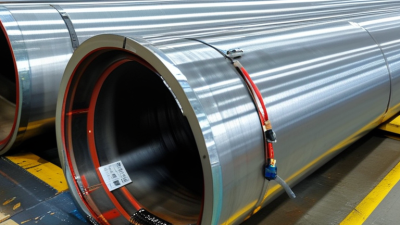
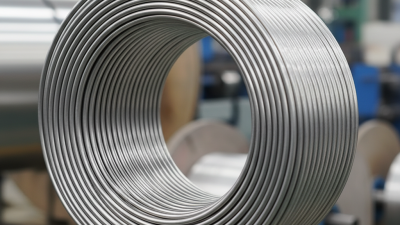
Choosing an Astm A269 304 Coil Tube supplier requires more than comparing prices. Buyers should verify material specifications, dimensions, production controls, and documentation before requesting a quotation. ASTM A269 covers seamless and welded austenitic stainless steel tubing for general service, but the required grade, finish, and delivery condition still need careful confirmation. Details matter.
A reliable manufacturer should be able to explain its tubing process and provide relevant inspection records, such as chemical composition and mechanical test results. Ask about coil length, outside diameter, wall thickness, tolerances, packaging, and traceability. These details affect installation, handling, and performance in systems that carry fluids or gases. A clear technical conversation can reveal more than a polished catalog.
This guide introduces manufacturers and suppliers of ASTM A269 304 coil tube and outlines practical points for comparing them. Consider production capacity, lead times, quality procedures, export experience, and responsiveness to technical questions. Verify claims directly, and request current documents for the exact product being quoted. A supplier may look suitable on paper yet struggle with a specific tolerance or delivery schedule. That possibility deserves attention. There is no universal best choice; the right partner depends on operating conditions, order volume, and the level of documentation your project requires.
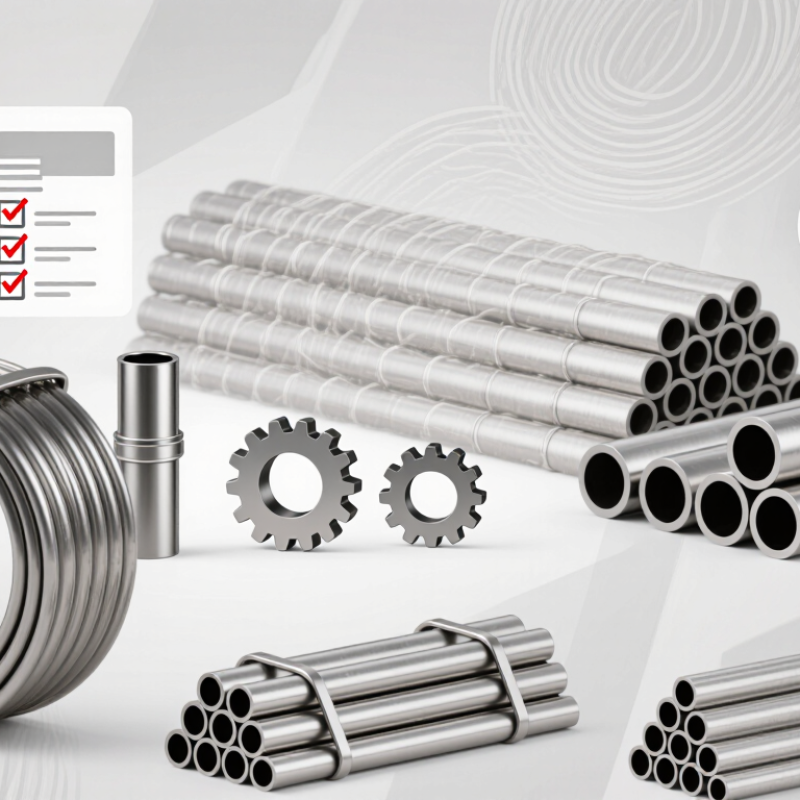
ASTM A269 defines requirements for seamless and welded austenitic stainless steel tubing used in general service. For 304 coil tubing, the standard addresses chemical composition, mechanical properties, dimensions, and inspection. A certificate should identify the grade and heat, while test records should show compliance with applicable requirements. Buyers should also confirm coil length, outside diameter, wall thickness, and tolerances. A269 does not make every coil interchangeable; forming and handling can affect practical performance.
The specification includes testing provisions such as tensile and hardness tests, plus flattening and hydrostatic or nondestructive electrical testing, as applicable. These checks help reveal material or manufacturing problems, but they do not replace application-specific corrosion assessment. The Nickel Institute’s technical guidance on stainless steel emphasizes that corrosion resistance depends on environment, temperature, and surface condition.
Small details matter: chloride-bearing water can challenge 304, even when tubing meets its standard. ASTM International’s A269 text should be checked for the current edition and purchase-order requirements. That step is easy to overlook.
Global stainless crude steel production reached 58.4 million tonnes in 2023, according to worldstainless, showing the scale of the material market—not proof that any particular coil meets A269.
Ask suppliers for traceable test documentation and verify dimensions on received coils.
304 coil tubes are valued for their balance of corrosion resistance, formability, and weldability. Made from austenitic stainless steel, they suit many general-purpose fluid and instrumentation systems. Under ASTM A269, tubing is specified for general service, but buyers should confirm the required grade, dimensions, and test documentation. The standard alone does not guarantee suitability for every operating condition.
In practical use, coiled tubing can reduce the number of joints in long runs. That may simplify installation and limit potential leak points. Common applications include instrument lines, heat exchangers, process equipment, and food-handling systems. Grade 304 performs well in many indoor and mildly corrosive environments. It is less suitable for sustained exposure to high chloride levels, where pitting may occur. That limitation is easy to overlook.
Tips: Check the coil’s outside diameter, wall thickness, and temper before ordering. Ask for material test certificates, and compare them with the project specification. For tight bends, confirm the minimum bend radius with the supplier. A small trial bend can reveal problems early. Even so, installation quality still matters.
| Comparison Dimension | Typical 304 Coil Tube Information | Buyer or Application Consideration |
|---|---|---|
| Applicable standard | ASTM A269 covers seamless and welded austenitic stainless-steel tubing for general corrosion-resisting and low- or high-temperature service. | Confirm the purchase specification, manufacturing route, inspection requirements, and applicable edition of the standard. |
| Common grade designation | Type 304; UNS S30400. Type 304L (UNS S30403) is a separate low-carbon grade often specified where reduced sensitization after welding is important. | Check the material test certificate to ensure the supplied grade matches the order. Do not treat 304 and 304L as interchangeable without approval. |
| Chemical composition | For Type 304, common ASTM limits include chromium 18.0–20.0%, nickel 8.0–10.5%, carbon no more than 0.08%, manganese no more than 2.00%, and silicon no more than 1.00% by mass. | Verify the exact chemistry limits against the governing product specification and the certified heat analysis. |
| Minimum mechanical properties | Typical ASTM A269 minimums for annealed TP304 tubing include tensile strength of 515 MPa (75 ksi), yield strength of 205 MPa (30 ksi), and elongation of 35%. | Mechanical requirements can depend on product form, size, and specification details. Confirm acceptance criteria on the order. |
| Corrosion resistance | 304 provides useful resistance to many atmospheric and mildly corrosive environments. It is not generally the preferred choice for sustained exposure to chloride-rich conditions. | Assess the actual chemical concentration, temperature, exposure time, and cleaning regime. Pitting or crevice corrosion may occur in chlorides. |
| Formability and joining | Austenitic 304 is generally formable and weldable using suitable procedures. Cold work can increase strength and hardness. | For welded tubing or formed coil systems, review fabrication procedures and any post-weld cleaning or passivation requirements. |
| Coil dimensions | Outside diameter, wall thickness, coil length, and coil diameter are product-order details; there is no single universal dimension range for all ASTM A269 304 coil tubing. | Request the available size schedule, dimensional tolerances, minimum order length, and confirmation that the required size can be supplied in coil form. |
| Common applications | Instrument and control lines, general-purpose process tubing, heat-transfer coils, food-processing equipment, and architectural or utility systems in suitable environments. | Application suitability depends on pressure, temperature, fluid chemistry, hygiene requirements, and applicable design codes. |
| Supplier qualification | Evaluate documented compliance, traceability, dimensional inspection, surface condition, testing capability, packaging, and delivery consistency. | Request material test reports and clarify inspection, marking, certification, and nonconformance procedures before placing an order. |
| Selection note | Property values and application examples are general guidance, not a substitute for the current ASTM specification, engineering design, or project requirements. | Have a qualified materials or design professional verify grade suitability for the intended service conditions. |
ASTM A269 304 coil tubing begins with stainless steel strip or a welded tube formed into a continuous length. The material is shaped, welded when required, and drawn through dies to reach its specified diameter and wall thickness. Controlled drawing improves dimensional consistency, but excessive reduction can affect ductility. Process details vary with the product route.
Heat treatment restores useful ductility after forming. For many products, solution annealing heats the tubing before rapid cooling; the exact cycle depends on material condition and applicable requirements. The tubing is then straightened or coiled, while operators check for dents, scratches, and uneven turns. Small marks matter.
Testing verifies more than appearance. Dimensional checks measure outside diameter and wall thickness at defined intervals. Hydrostatic testing can reveal leakage under pressure, while eddy-current examination helps detect certain surface and near-surface discontinuities. The selected inspection method and acceptance criteria should match the purchase specification. Test records should identify the heat, dimensions, and results, so a buyer can trace each coil. One practical detail is often overlooked: a sound test result does not guarantee easy installation if the coil has been kinked during handling. Review both manufacturing records and delivery condition.
When evaluating ASTM A269 304 coil tube manufacturers and suppliers, look beyond a product page. Ask for material test reports that identify the heat number, grade, and applicable specification. Check that the paperwork matches the tube markings and purchase order. Traceability matters.
Review the details that affect installation: outside diameter, wall thickness, coil length, and dimensional tolerances. Request sample inspection records and ask how welds are examined on welded tubing. For demanding service, clarify available testing and acceptance criteria before ordering. A clean, even surface is useful, but appearance alone cannot confirm quality. I have seen specifications leave coil length vague; that small omission can complicate handling and cause waste.
Tips: Compare a recent certificate with a physical sample. Confirm packaging prevents dents, moisture, and coil tangling. Ask about lead time, batch consistency, and how nonconforming material is handled. Get answers in writing. If a supplier cannot explain its inspection process plainly, pause and reassess.
Leading ASTM A269 304 coil tube manufacturers and suppliers should demonstrate more than polished brochures. Their process controls matter. ASTM A269 covers nominal-wall stainless steel tubing for general corrosion-resistant and low- or high-temperature service. Buyers should verify grade documentation, dimensions, weld quality, and test records against the ordered specification. For coil tubing, request checks for outside diameter, wall thickness, ovality, and surface condition. A small dimensional drift can complicate installation around a tight bend.
Market scale makes supplier scrutiny important. World Stainless reported global stainless steel melt-shop production of 58.4 million tonnes in 2023, up 4.6% from 2022. This broad production figure does not measure 304 coil tube output, but it shows the size of the stainless supply chain. Ask prospective suppliers for traceable material certificates, inspection procedures, and sample coil measurements. Confirm whether the quoted product is seamless or welded; the distinction affects cost and application choices. Details count.
Good suppliers also explain limits plainly. 304 performs well in many atmospheric and mild chemical environments, but chloride exposure can cause pitting. Request application-specific guidance rather than a blanket corrosion promise. Lead time, minimum order quantity, and packaging deserve equal attention, especially when long coils must arrive without kinks or contamination. Paperwork can look complete while a real production detail remains unclear. A sample inspection helps.
13295445693