


7 Tips for Buying Stainless Steel Seamless Steel Coiled Pipe
Buying Stainless Steel Seamless Steel Coiled Pipe requires more than comparing prices. The specification must match pressure, temperature, corrosion exposure, and installation conditions. A bright surface can still hide unsuitable chemistry, poor heat treatment, or inconsistent wall thickness.
The International Stainless Steel Forum reported global stainless crude steel production of approximately 58.4 million tonnes in 2023. That figure shows the material’s scale, but it does not guarantee product quality. Markets contain major differences between certified seamless tubing, welded coil, and loosely described “stainless pipe.” The World Steel Association also emphasizes that stainless steel selection depends heavily on service environment and alloy performance. Details matter.
Dr. James R. Davis, editor of ASM Specialty Handbook: Stainless Steels, states, “Stainless steels are iron-base alloys containing a minimum of about 11% chromium.” This basic fact explains why grade verification matters. Chromium alone is not enough. Nickel, molybdenum, nitrogen, carbon, and heat treatment can change performance significantly.
This guide presents seven practical tips for buying Stainless Steel Seamless Steel Coiled Pipe. It examines grade selection, outside diameter, wall thickness, coil length, manufacturing standards, inspection documents, and supplier capability. Ask for MTRs, hydrostatic or eddy-current test records, dimensional reports, and traceability markings. Do not accept vague certificates.
Some decisions remain less certain. A low-cost coil may reduce purchasing expense today, yet increase fitting waste, replacement risk, or downtime later. Field experience also shows that “seamless” should be confirmed through manufacturing records, not marketing language. Measure carefully. Question assumptions. Then compare suppliers on verified performance, not polished photographs.
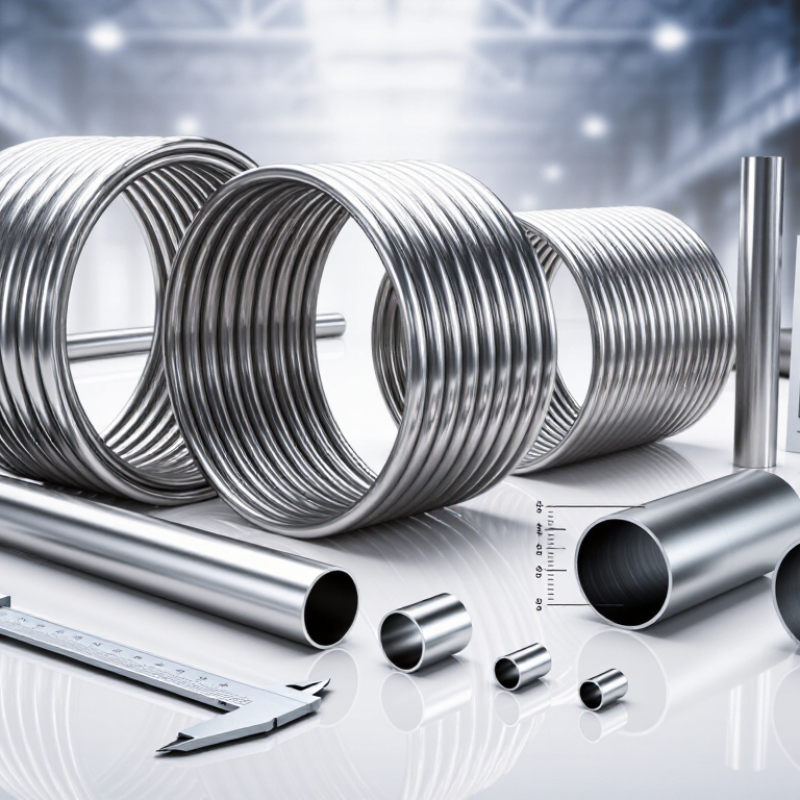
Define Service Conditions: Pressure, Temperature, Media, and Required Design Life
Buying a stainless steel seamless steel coiled pipe starts with service conditions, not surface appearance. Record the operating pressure, design pressure, minimum and maximum temperature, fluid composition, flow rate, and required design life. A pipe carrying hot chloride water faces different risks from one transporting clean gas. Small details matter.
Tip: Describe the media precisely. Include chlorides, acids, moisture, solids, and cleaning chemicals. “Corrosive liquid” is too vague for reliable material selection. Ask a qualified engineer to review compatibility, pressure calculations, and applicable construction standards. The wrong assumption here can shorten service life quickly.
Temperature changes also affect strength, corrosion behavior, and coil flexibility. Note startup surges, shutdown conditions, vacuum exposure, and repeated thermal cycling. Then confirm the required service life, inspection access, and replacement limits. A ten-year design target may require different controls than a thirty-year system. Request heat numbers, dimensional reports, mechanical test results, and pressure-test records for traceability.
Tip: Challenge the specification. Is the stated pressure continuous or temporary? Is the fluid actually dry? I have seen clean-looking operating data hide wet gas and unexpected deposits. That uncertainty deserves investigation. Verify wall thickness after corrosion allowance, bending operations, and installation tolerances. Do not select a coiled pipe solely because its alloy name sounds suitable. Field conditions, fabrication quality, and documented testing often decide whether the pipe performs as expected.
7 Tips for Buying Stainless Steel Seamless Steel Coiled Pipe — Define Service Conditions: Pressure, Temperature, Media, and Required Design Life
| Tip | Service Condition to Define | Illustrative Design Input | Why It Matters | Buying Recommendation | Verification Documents |
|---|---|---|---|---|---|
| 1. Confirm the pressure envelope | Operating pressure, design pressure, pressure fluctuations, vacuum conditions, and pressure-test requirements. | Operating pressure: 80 bar; design pressure: 100 bar; hydrostatic test pressure: approximately 1.5 times the design pressure, subject to the applicable specification. | Pressure determines the required wall thickness, allowable stress, tube outside diameter, and safety margin. | Provide both normal and upset conditions. Do not select a tube based only on nominal operating pressure. | Design calculation, material certificate, dimensional inspection report, and pressure-test report. |
| 2. Specify the complete temperature range | Minimum and maximum metal temperature, start-up and shutdown temperatures, thermal cycling, and external ambient conditions. | Continuous service: 350 °C; short-term maximum: 400 °C; minimum start-up temperature: −20 °C. | Temperature affects yield strength, creep resistance, oxidation, thermal expansion, and allowable design pressure. | Use temperature-rated design data rather than room-temperature strength values. Assess thermal expansion for long coils. | Temperature design basis, heat-treatment records, mechanical test results, and applicable high-temperature design calculation. |
| 3. Identify the process media | Chemical composition, concentration, pH, dissolved oxygen, chlorides, sulfur compounds, solids, flow velocity, and phase condition. | Aqueous chloride service: 3.5% sodium chloride; pH 7–8; dissolved oxygen present; flow velocity up to 2 m/s. | The medium controls pitting, crevice corrosion, stress-corrosion cracking, erosion, and general corrosion risk. | Select the alloy only after reviewing the full chemistry. Chloride concentration and temperature should be treated as combined factors. | Chemical compatibility review, corrosion assessment, positive material identification, and surface-finish records. |
| 4. Define the required design life | Target service life, operating hours per year, inspection intervals, corrosion allowance, and replacement strategy. | Required design life: 20 years; operation: 8,000 hours per year; planned inspection every 24 months. | A longer life may require improved alloy selection, greater wall thickness, better surface control, and more rigorous inspection. | State whether the design life is based on corrosion allowance, fatigue cycles, creep exposure, or a combination of these factors. | Life-assessment calculation, corrosion-rate basis, inspection plan, and traceable manufacturing records. |
| 5. Match the alloy to the environment | Required resistance to chloride exposure, acids, alkalis, high temperature, intergranular corrosion, or welding-related sensitization. | General clean-water service may use an austenitic stainless grade; higher chloride or aggressive chemical exposure may require a more corrosion-resistant alloy. | Different stainless steel families have different limits for pitting resistance, strength, weldability, and temperature capability. | Specify the grade, chemical composition limits, solution-annealing condition, and required corrosion-resistance tests. | Heat analysis, product analysis where required, alloy identification, heat-treatment certificate, and corrosion-test results. |
| 6. Check coil dimensions and installation loads | Outside diameter, wall thickness, total length, minimum bend radius, ovality, coil diameter, support spacing, vibration, and connection method. | Outside diameter: 12.7 mm; wall thickness: 1.5 mm; continuous length: 100 m; minimum installation bend radius: 100 mm. | Bending can cause ovality, wall thinning, wrinkling, residual stress, and reduced flow area if the radius is too small. | Confirm dimensional tolerances, coil winding direction, end protection, straightness after uncoiling, and compatibility with fittings. | Dimensional report, bend or reeling test, visual inspection, end-condition record, and packaging inspection. |
| 7. Require inspection and traceability | Applicable product standard, nondestructive testing, leak testing, cleanliness, surface condition, marking, and batch traceability. | 100% eddy-current or equivalent examination where specified; hydrostatic or pneumatic leak test according to the purchase specification. | Seamless construction does not eliminate risks from inclusions, surface defects, dimensional variation, or handling damage. | Write acceptance criteria into the purchase order and require heat-number traceability from raw material through final inspection. | Certificate of conformity, material test certificate, nondestructive-test report, pressure-test report, inspection release note, and packing list. |
Related Posts
-
Top Stainless Steel Seamless Steel Coiled Pipe Suppliers
-
Top 10 316L Coiled Tubing Suppliers Worldwide?
-
2026 Top Benefits of 316L Coiled Tubing for Global Buyers
-
How to Choose 304 Seamless Steel Tube Suppliers?
-
Top 10 Best Uses of 304 Steel Tube for Various Applications?
-

Top 5 Best Uses for 304 Steel Tube in Modern Construction?
-

Phone
-

E-mail
-

Whatsapp
-

WeChat
WeChat
13295445693
-

Top