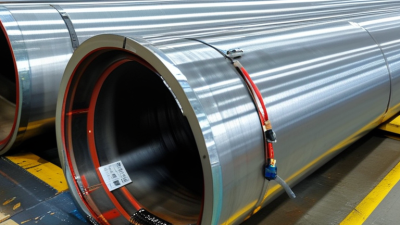
Selecting the right Stainless Steel Coil Tube Manufacturer affects safety, uptime, and long-term operating cost. A coil tube may look simple, but its wall thickness, weld quality, surface finish, and bending performance reveal the manufacturer’s real capability.
World Stainless reported approximately 58.4 million tonnes of stainless steel production in 2023. That scale reflects strong global demand, but it does not guarantee consistent tubing quality. The International Energy Agency also continues to highlight industrial efficiency and emissions reduction as major manufacturing priorities. Buyers should therefore examine material traceability, production equipment, inspection procedures, and environmental controls together.
Markus Moll, Executive Director of World Stainless, has described stainless steel as “a sustainable material by nature.” That statement matters, but it needs evidence. Ask for mill certificates, heat numbers, dimensional records, pressure-test results, and relevant ASTM compliance. ISO 9001 certification can support process reliability, although certification alone is never enough.
This guide presents seven practical tips for comparing manufacturers. It considers alloy selection, tube dimensions, forming technology, welding quality, testing, customization, delivery performance, and after-sales support. Look closely at the details. A clean factory floor, calibrated instruments, and clearly labeled coils often indicate disciplined production.
Still, no checklist removes every risk. Supplier claims may sound impressive. Samples can outperform routine batches. Independent inspection may be worthwhile for critical applications. The best decision combines documented evidence, technical conversations, and a realistic trial order. Reliability is built gradually, not promised in a brochure.
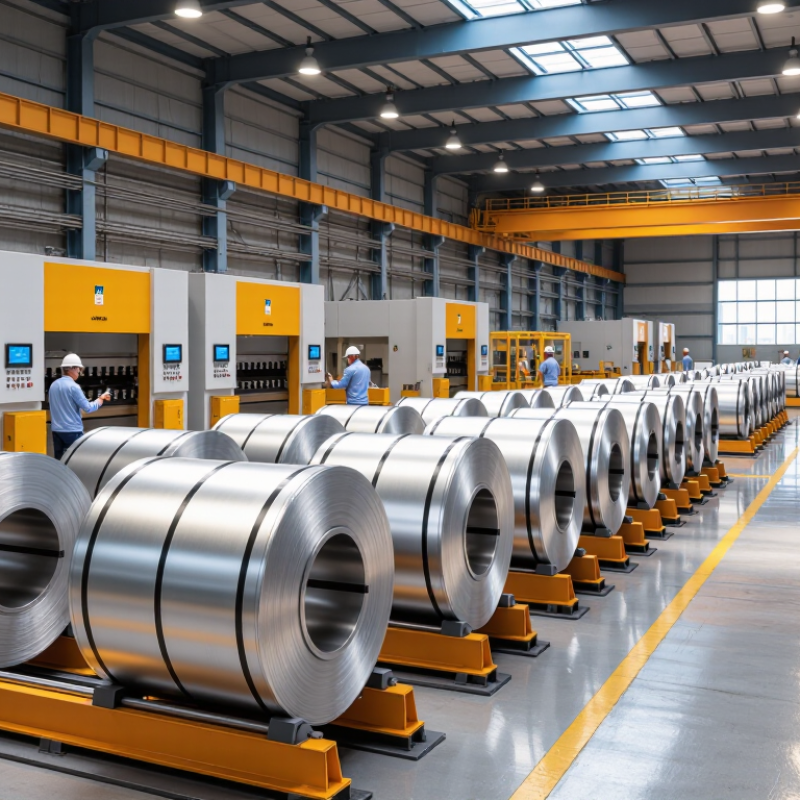
Defining requirements starts with the operating environment, not the supplier’s catalog. State the outside diameter, wall thickness, coil length, alloy, and dimensional tolerances. Do not write “stainless steel” alone. Chlorides, acids, heat, and cyclic pressure can change the correct grade. Molybdenum-bearing alloys may suit marine service better than standard austenitic grades. World Stainless Association statistics recorded 58.4 million tonnes of stainless crude steel production in 2023. That scale reflects a broad material range, not one universal solution.
Pressure and temperature need clear limits. Include the design pressure, working temperature, flow medium, and minimum bending radius. Then define whether the tube should be seamless or welded. ASTM A269 commonly guides general-service stainless tubing, while ASTM A249 addresses welded tubing for heat-exchanger applications. These standards do not replace engineering judgment. A specification can still be incomplete.
Ask for dimensional inspection, surface requirements, and traceable material certificates. EN 10204 3.1 documentation can support heat-number traceability. Consider positive material identification, eddy-current testing, hydrostatic testing, and weld inspection when the application demands them. A practical mistake is requesting a polished surface without defining roughness or allowable defects. Another is choosing a thin wall for easy coiling, then discovering poor pressure resistance. I would rather over-specify the service conditions than guess after installation. Even experienced buyers miss the bending requirement sometimes. That deserves a second review.
Tip 1: Verify the material before trusting the quotation. The 2024 World Steel Association report recorded about 1.89 billion tonnes of crude steel production in 2023. That scale makes traceability essential, not optional. Ask for the heat number, chemical composition, mechanical results, and an EN 10204 3.1 inspection certificate. Match every document to the coil label.
A reliable manufacturer should state the exact grade, tube dimensions, wall tolerance, and applicable standard. ASTM A269/A269M covers many austenitic stainless steel tubes for corrosion-resistant service. ASTM A213 may apply to heat-exchanger or high-temperature applications. Do not accept “stainless steel” as a complete specification. It is too vague. Request PMI testing to confirm alloy chemistry, then review tensile, hardness, flattening, and hydrostatic or eddy-current test records. PMI alone cannot prove everything.
Tip 2: Examine manufacturing controls, not only certificates. Check whether the ISO 9001 certificate covers the actual tube facility and remains valid. Ask how operators control welding, annealing, cleaning, and coiling tension. In a factory audit, look for readable heat-number markings and protected tube ends. Small details reveal discipline.
Tip 3: Challenge the data. Compare sample test results with the purchase specification and tolerances. A polished report can still hide an incorrect grade or mixed batch. I have seen documentation look complete while traceability stopped at the warehouse. That weakness deserves a second inspection.
| Tip | Evaluation Dimension | What to Verify | Relevant Standard or Test | Recommended Evidence | Practical Assessment |
|---|---|---|---|---|---|
| 1 | Material Grade and Chemistry | Confirm that the stainless steel grade, product form, heat number, and chemical composition match the purchase specification. | ASTM A269/A213 or the applicable EN specification; verify chromium, nickel, molybdenum, carbon, manganese, silicon, phosphorus, and sulfur limits. | Mill Test Certificate (MTC), heat-lot traceability record, and positive material identification (PMI) report where required. | Accept only with full traceability |
| 2 | Manufacturing Standard | Check whether the tube manufacturing route and quality controls are suitable for seamless or welded coiled tubing requirements. | ASTM A269 is commonly used for seamless and welded austenitic stainless steel tubing for general corrosive-service applications; ASTM A213 covers seamless boiler, superheater, and heat-exchanger tubes. | Current product specification, process flow chart, welding procedure records if applicable, and internal inspection plan. | Standard must match the service |
| 3 | Dimensional Accuracy | Review outside diameter, wall thickness, coil length, ovality, straightness, and dimensional tolerances for the intended installation. | Dimensional tolerances should be stated in the applicable material standard and purchase specification. Typical inspection tools include calibrated micrometers, ultrasonic thickness gauges, and length-measuring equipment. | Inspection report showing actual measurements, instrument calibration certificates, and a clearly stated tolerance range. | Require actual measured values |
| 4 | Pressure and Leak Testing | Verify that every production lot is tested for leaks and pressure integrity at conditions appropriate for the application. | Hydrostatic or pneumatic testing may be specified by ASTM A269/A213, the applicable design code, or the customer specification. Test pressure and hold time must be documented. | Pressure-test certificate identifying the tube heat, coil number, test medium, pressure, hold time, and acceptance result. | 100% test coverage preferred |
| 5 | Surface Finish and Cleanliness | Inspect the internal and external surfaces for scale, cracks, pits, scratches, weld irregularities, oil residue, and contamination. | Surface condition should comply with the ordered finish, such as annealed and pickled, bright annealed, or mechanically polished. Cleaning requirements should be defined before production. | Surface inspection records, photographs when needed, cleanliness statement, and passivation or pickling records if specified. | Match finish to fluid service |
| 6 | Quality Management System | Assess whether the manufacturer operates a documented and independently audited quality management system. | ISO 9001:2015 certification demonstrates conformity to a quality management system standard; it does not replace product-specific inspection or testing. | Valid certificate, certification scope, expiry date, latest audit status, corrective-action records, and batch-level quality documentation. | Verify scope and validity |
| 7 | Documentation and Delivery Control | Confirm that packaging, coil identification, marking, corrosion protection, shipping dimensions, and delivery records preserve product traceability. | Documentation should follow the purchase order and applicable inspection standard. EN 10204 type 3.1 inspection documentation may be requested when third-party or customer-specified certification is required. | Certificate pack, packing list, dimensional drawing, coil tags, material identification, preservation instructions, and nonconformance procedure. | No shipment without complete records |
7 Tips for Choosing a Stainless Steel Coil Tube Manufacturer
Evaluate Production Capacity and Technical Expertise
Production capacity is more than a large factory floor. It means consistent output, stable processes, and documented control. The International Stainless Steel Forum reported 58.4 million tonnes of global stainless steel production in 2023. This volume increases buyer choice, but it also makes supplier evaluation harder.
Ask how many tube-forming lines operate daily. Check the available outside diameters, wall thicknesses, coil weights, and heat-treatment ranges. A capable manufacturer should explain its welding method clearly. It should also provide evidence of eddy-current testing, hydrostatic testing, dimensional checks, and surface inspection. Request recent capacity records, not only planned figures. A polished brochure proves little.
Technical expertise appears in small details. For example, ask how operators control ovality after coiling and how engineers prevent cracking during repeated bending. Review material certificates, heat numbers, calibration records, and nonconformance reports. I have found that a supplier with fewer machines can outperform a larger facility through better process discipline.
The ISO Survey 2022 recorded 1,265,216 ISO 9001 certificates worldwide. Certification supports quality management, but it does not replace technical verification. Confirm whether the quality system covers the actual coil tube line. Also compare procedures with applicable ASTM or EN requirements. Some manufacturers answer quickly. Others avoid precise questions. That hesitation deserves attention. Even experienced buyers can overvalue annual tonnage and overlook traceability, maintenance planning, or operator training.
Recommended procurement weighting for evaluating production capacity and technical expertise.
Production capacity, material traceability, dimensional control, and testing capability should receive the greatest emphasis because they directly affect delivery reliability, tube performance, and quality consistency. The percentages represent a practical 100-point evaluation model that can be adapted to project requirements.
Compare pricing, lead times, and customization options before judging a stainless steel coil tube manufacturer. A low quotation may exclude tooling, inspection, packaging, or freight. Request an itemized price sheet with material grade, tube diameter, wall thickness, and coil length. Ask whether prices change with order volume or metal market movements. Cheap is not always cheap.
Lead time should include drawing approval, raw material purchasing, production, testing, and dispatch. Ask for a written schedule with milestone dates, not only a promised shipping day. A capable manufacturer should explain capacity during peak periods and provide realistic updates. Request recent production records or sample delivery data when possible. Delays happen. Vague answers are worse.
Customization can affect both cost and timing. Discuss bending radius, dimensional tolerances, surface finish, end connections, and cleaning requirements before signing an order. Confirm whether the manufacturer can supply material certificates, pressure-test reports, and batch traceability. A trial coil may reveal springback, scratches, or inconsistent wall thickness. That extra check costs time, but correcting a full batch costs more. I would also compare response quality, not just numbers; a quick quote with missing technical details deserves another review. A useful supplier should challenge unclear specifications instead of accepting every request blindly. Details matter.
Choosing a stainless steel coil tube manufacturer requires more than comparing prices. Review certifications carefully. A valid ISO 9001 certificate should match the factory’s actual production scope and address. Environmental and safety certifications can also reveal management discipline. Ask for recent material certificates, heat-number traceability, and inspection records for wall thickness, ovality, surface quality, and pressure testing.
Paper is not proof. Request sample documents and confirm issuing bodies independently. For regulated applications, check whether testing follows the required ASTM, ASME, or EN standard. A manufacturer should explain its sampling frequency, calibration process, and nonconformance handling clearly. I have found that vague answers often signal weak process control, even when the certificate folder looks impressive.
Service quality becomes visible after the order is placed. Ask how quickly engineers answer technical questions and whether they provide drawings, coil-length calculations, and packaging guidance. A dependable supplier shares realistic lead times instead of promising everything immediately. Customer references should describe repeat orders, delivery accuracy, complaint response, and corrective actions. Ask for evidence. A delayed shipment may be understandable; silence is harder to accept. Review communication records, inspection photos, and packing details before approving production. Details matter.
13295445693