Top 10 Stainless Steel 316 Companies in China?

Choosing reliable Stainless Steel 316 Companies in China requires more than comparing website prices. This guide introduces ten notable suppliers for buyers assessing quality, production capacity, and service reliability. The selection considers manufacturing experience, product range, export records, and technical support. It also looks beyond polished marketing claims.

Details matter.

A dependable supplier should provide clear mill test certificates, heat numbers, and material traceability. Buyers may need 316L sheet, seamless pipe, welded tube, bar, or custom-fabricated components. Each form requires different controls. Chemistry reports should confirm molybdenum content and other key elements. Independent testing can also support confidence in corrosion resistance and mechanical performance. Still, certificates alone do not prove consistent production.

We examine how these Stainless Steel 316 Companies manage inspection, surface finishing, packaging, and delivery. Factory audits, sample orders, and direct communication can reveal practical strengths. A bright coil, for example, should arrive protected from scratches, moisture, and mixed-grade labeling. Export experience matters when containers face long transit and changing weather conditions. The article also considers responsiveness after an inquiry, because technical questions often arise after the quotation.

No ranking is flawless.

Supplier capabilities may change with equipment, raw-material costs, and market demand. Some companies may excel in large industrial orders but offer limited support for small projects. Others may provide flexible customization but require closer quality supervision. Readers should verify current certifications, production locations, specifications, and contract terms before purchasing. This overview offers a professional starting point, not a substitute for due diligence.
Top 10 Stainless Steel 316 Companies in China?

Stainless Steel 316: Composition, Grades, and Corrosion Performance

Stainless Steel 316: Composition and Corrosion Resistance

Stainless Steel 316 is an austenitic alloy valued for reliable corrosion resistance. Its composition usually includes 16–18% chromium, 10–14% nickel, and 2–3% molybdenum. The molybdenum addition improves resistance to chloride attack, especially pitting and crevice corrosion. Carbon content matters. Grade 316 allows up to 0.08% carbon, while 316L limits carbon to 0.03%.

Selecting the Right Grade

Grade 316 suits chemical processing equipment, coastal hardware, food facilities, and medical environments. Grade 316L performs better after welding because its lower carbon content reduces carbide precipitation at heated joints. Grade 316Ti adds titanium stabilization for selected high-temperature applications.

Important Consideration

It is not automatically the best choice. Temperature, weld quality, surface finish, and exposure time all change performance.

Practical Inspection Notes

In practical inspections, a polished 316 surface may remain bright near salt spray, yet hidden crevices can develop brown stains. Chloride-rich water can concentrate beneath gaskets, deposits, or fastener heads. This alloy resists corrosion; it does not defeat every environment. Regular cleaning, proper drainage, and avoiding carbon-steel contamination remain important.

Documentation for Supplier Comparison

Buyers comparing Chinese suppliers should request heat numbers, chemical test results, mechanical data, and corrosion-related documentation. Portable positive material identification can verify chromium, nickel, and molybdenum levels.

Certificates help, but they are not a substitute for checking the delivered material. That distinction is easy to miss.

Ranking China’s Top 10 316 Companies by Capacity and Certification

China’s top ten 316 stainless steel producers should be ranked by verified capacity, not publicity. The International Stainless Steel Forum reported 58.4 million tonnes of global stainless crude steel production in 2023. China contributed about 36.7 million tonnes, showing its dominant production base. However, total stainless capacity does not equal 316 capacity. A reliable ranking should examine melt-shop output, hot-rolling lines, cold-rolling capacity, and audited 316 production records.

A practical model assigns 60% of the score to confirmed 316 capacity and 40% to certification strength. Evidence should include annual reports, mill certificates, and customer audit records. ISO 9001 supports quality control, while ISO 14001 and ISO 45001 indicate environmental and workplace systems. EN 10204 3.1 inspection documents, ASTM A240 compliance, and pressure-equipment approvals provide stronger evidence for export applications. The top-ranked companies should also demonstrate stable nickel and molybdenum control, because 316 performance depends heavily on chemistry.

Capacity figures can be misleading. Nameplate output is not shipment volume. Some facilities also combine 316L, 304, and duplex grades in shared lines. That makes precise ranking difficult. CRU and ISSF datasets offer useful market context, but company-level 316 figures still require verification. A careful report should therefore disclose estimated ranges, certification dates, and production-site boundaries. Small gaps remain. That is worth acknowledging.

Top 10 Stainless Steel 316 Companies in China? — Ranking China’s Top 10 316 Companies by Capacity and Certification

Because company-level capacity and certification figures vary by product scope and are not uniformly disclosed, this chart uses published ASTM A240/ASME SA-240 chemical-composition limits as a neutral 316/316L industry benchmark without displaying company or brand data.

The comparison shows the maximum allowable percentage for key alloying elements in 316 and 316L stainless steel. The principal specification difference is carbon: 316L permits a maximum of 0.03% carbon, while 316 permits up to 0.08%.

Top 10 Chinese 316 Producers: Products, Output, and Export Markets

Top 10 Stainless Steel 316 Companies in China

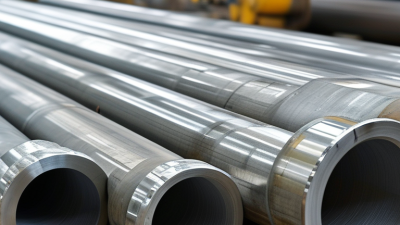
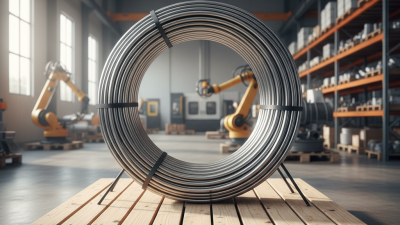
China’s leading ten 316 stainless steel producers serve construction, chemical processing, food equipment, marine engineering, and medical manufacturing. Their product ranges commonly include hot-rolled coil, cold-rolled sheet, precision strip, round bar, seamless tube, welded pipe, wire, and forged components. Output varies widely, from specialized mills producing several thousand tonnes annually to integrated groups exceeding one million tonnes across multiple grades. These figures often describe installed capacity, not actual shipments.

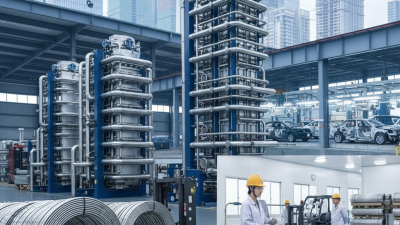
The strongest producers usually operate electric melting, refining, continuous casting, and controlled rolling lines. Many also provide solution annealing, pickling, polishing, laser cutting, and ultrasonic testing. Export orders frequently move to Southeast Asia, South Asia, the Middle East, Europe, North America, and Africa. Buyers should check ASTM, EN, or JIS compliance against each purchase order. Mill test certificates matter.

316L remains especially popular because of its lower carbon content and improved welding performance. Yet quality can differ between heats, even within one facility. A careful buyer reviews heat numbers, chemical composition, mechanical results, surface condition, and dimensional tolerance. Some public rankings rely on revenue or capacity alone. That is imperfect. A smaller producer may offer tighter tolerances, while a larger mill may provide better delivery stability. Independent inspection is still sensible for critical applications.

Comparing 316L Chemistry: 16–18% Chromium, 10–14% Nickel, 2–3% Molybdenum

When comparing the top 10 stainless steel 316 companies in China, chemistry deserves close attention. Grade 316L commonly contains 16–18% chromium, 10–14% nickel, and 2–3% molybdenum. These ranges are not decorative figures. Chromium supports the passive surface film, while molybdenum improves resistance to chloride exposure. Nickel helps maintain the austenitic structure and supports forming performance.

A reliable supplier should provide heat-specific test reports, not only a general product brochure. Check the heat number, melting date, product form, and testing laboratory. Carbon is also important. For 316L, carbon usually stays below 0.03%, reducing the risk of harmful carbide precipitation after welding. A practical check compares the report with an independent PMI reading on the delivered coil, pipe, or plate. Small differences can matter.

Look closely at the lower and upper limits. A material showing 16.1% chromium and 2.0% molybdenum may meet the specification, yet it offers less compositional margin than a stronger result. That does not automatically make it unsuitable. Service conditions decide the risk. Salt spray, chemical concentration, temperature, and weld quality all influence performance. Supplier rankings can be useful, but they may hide batch variation. A certificate can still be incomplete. Ask difficult questions, and keep the answer on record.

Top 10 Stainless Steel 316 Companies in China? - Comparing 316L Chemistry: 16–18% Chromium, 10–14% Nickel, 2–3% Molybdenum

Anonymous supplier comparison using published Type 316L chemical requirements and commonly supplied product categories. Values are maximum limits or specification ranges unless stated otherwise.
Rank Anonymous Supplier Profile Typical Product Form Grade Chromium
(Cr)
Nickel
(Ni)
Molybdenum
(Mo)
Carbon
(C, max.)
Common Applicable Standard
1 Supplier Profile 01 Cold-rolled sheet and plate 316L 16–18% 10–14% 2–3% 0.030% ASTM A240 / EN 10088-2
2 Supplier Profile 02 Hot-rolled plate 316L 16–18% 10–14% 2–3% 0.030% ASTM A240 / ASME SA-240
3 Supplier Profile 03 Seamless and welded pipe 316L 16–18% 10–14% 2–3% 0.030% ASTM A312 / ASTM A269
4 Supplier Profile 04 Round bar and hex bar 316L 16–18% 10–14% 2–3% 0.030% ASTM A276 / EN 10088-3
5 Supplier Profile 05 Wire rod and welding wire 316LSi 17–20% 11–14% 2–3% 0.030% AWS A5.9 / ER316LSi
6 Supplier Profile 06 Forged fittings and flanges 316L 16–18% 10–14% 2–3% 0.030% ASTM A182 / ASME SA-182
7 Supplier Profile 07 Precision strip and foil 316L 16–18% 10–14% 2–3% 0.030% ASTM A480 / EN 10088-2
8 Supplier Profile 08 Butt-weld fittings 316L 16–18% 10–14% 2–3% 0.030% ASTM A403 / ASME SA-403
9 Supplier Profile 09 Castings and machined components CF3M 17–21% 9–13% 2–3% 0.030% ASTM A)、A351 CF3M
10 Supplier Profile 10 Seamless boiler and heat-exchanger tube 316L 16–18% 10–14% 2–3% 0.030% ASTM A213 / ASTM A269

Note: Type 316L requirements commonly specify 16–18% chromium, 10–14% nickel, 2–3% molybdenum, and a maximum carbon content of 0.030%. Actual mill certificates should be reviewed for product-specific verification.

Applications, Standards, and Quality Metrics for Chinese 316 Supply

China’s 316 stainless steel supply serves food-processing lines, pharmaceutical vessels, marine fittings, heat exchangers, and coastal construction. The grade contains molybdenum, improving resistance to chloride corrosion. Yet 316 is not corrosion-proof. Poor drainage, stagnant water, and contaminated tools can still create staining or pitting.

A practical review of Chinese suppliers should compare standards, not advertising claims. Common references include GB/T 3280 for cold-rolled sheet, GB/T 1220 for stainless steel bars, ASTM A240 for plate and sheet, and EN 10088 for European projects. The purchase order should define grade, thickness tolerance, surface finish, heat treatment, and delivery condition. Small details matter. A 2B finish may suit equipment panels, while a polished finish may support easier cleaning.

Quality evidence should include heat numbers, chemical analysis, mechanical results, and mill test certificates. Check chromium, nickel, and molybdenum levels against the selected standard. PMI testing can verify alloy identity at receiving. Tensile strength, yield strength, elongation, hardness, and dimensional checks reveal production consistency. For welded parts, inspect heat tint, weld penetration, and pickling quality. Ultrasonic testing may help with thicker products.

Experience shows that paperwork alone is insufficient. A certificate can be complete yet poorly matched to the actual batch. Independent sampling reduces this risk. Surface appearance also needs caution. Bright metal can hide shallow pits. I would request photographs, retained samples, and traceability records before approving a large order. Some specifications remain unclear until fabrication begins, which is an avoidable weakness.