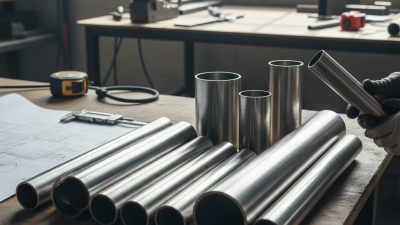
What is Stainless Steel Seamless Steel Coiled Pipe Used For?
Stainless Steel Seamless Steel Coiled Pipe plays a vital role in various industries. Its unique properties make it an optimal choice for many applications. This type of pipe combines strength, durability, and resistance to corrosion. These qualities are essential in sectors like oil and gas, pharmaceuticals, and food processing.
The seamless design enhances integrity and reduces the risk of leaks. This aspect is crucial in high-pressure systems where safety is paramount. Additionally, the coiled design aids in transportation and installation. It can fit into tight spaces and complex layouts. Users should consider the specific requirements of their projects before selecting this type of piping.
Challenges may arise, such as higher costs compared to welded alternatives. However, the longevity and reliability often justify the investment. The experience and expertise of manufacturers are key in maintaining quality standards. Choosing the right supplier is critical for ensuring the best performance of Stainless Steel Seamless Steel Coiled Pipe in any application.
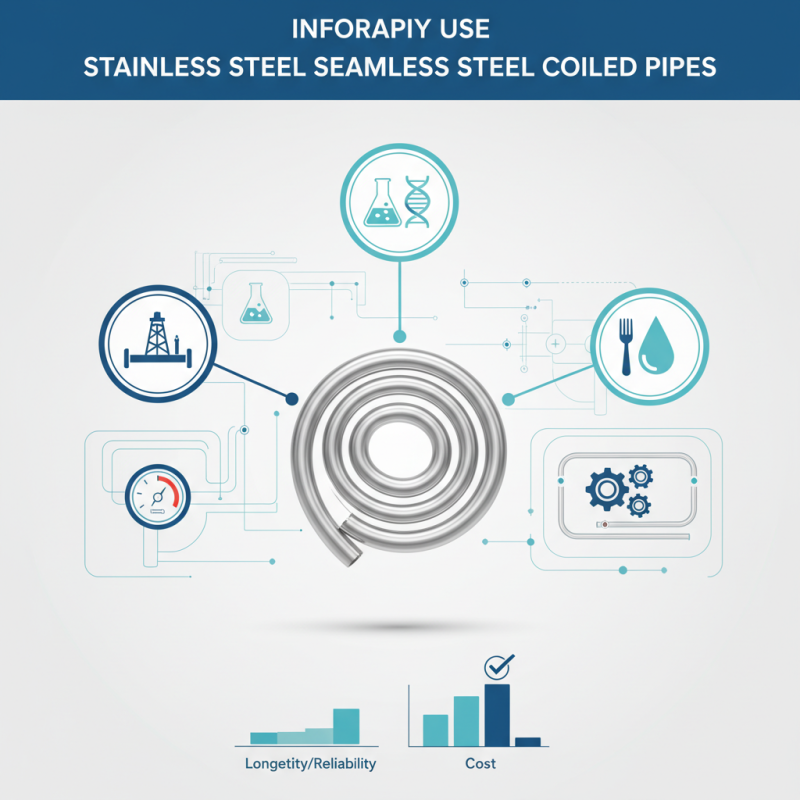
Applications of Stainless Steel Seamless Coiled Pipe in Industry
Stainless steel seamless coiled pipes find extensive use in various industrial applications due to their superior corrosion resistance and durability. One common application is in the oil and gas industry. Here, these pipes transport fluids and gases under high pressure. The seamless design ensures that they can withstand extreme conditions without the risk of leaks. They are often preferred for their ability to handle aggressive environments.
Another vital application is in the chemical processing industry. These coiled pipes are ideal for transporting corrosive substances. Their robustness ensures that they last longer, minimizing maintenance costs. Industries also utilize these pipes in heat exchangers. Their efficient thermal conductivity enhances system performance, particularly in power generation plants.
While stainless steel coiled pipes offer numerous benefits, not all applications may be suitable for them. Costs can be a limiting factor for smaller projects. Additionally, factors like flexibility and bending radius can affect performance. Companies must carefully evaluate their specific needs to ensure the right choice. This process requires knowledge and experience, especially when dealing with high-stakes operations.
Advantages of Using Stainless Steel Seamless Coiled Pipe
Stainless steel seamless coiled pipes are known for their reliability and durability in various applications. One significant advantage is their resistance to corrosion. This property makes them ideal for industries that require high hygiene standards, like food processing and pharmaceuticals. Unlike welded pipes, seamless pipes provide a uniform structure, reducing the risk of leaks. This feature ensures the safety of fluids, especially in sensitive environments.
Another advantage of these pipes is their flexibility when it comes to design and installation. They can easily bend without compromising their integrity. This flexibility allows for better space utilization in facilities. The lightweight yet sturdy characteristic also simplifies transport and installation. However, the cost can be higher than traditional pipes. This factor might lead to budget constraints for some projects.
While stainless steel seamless coiled pipes offer many benefits, they are not suited for every application. Certain environments may lead to faster wear and tear. It's essential to evaluate specific needs before choosing this product. Understanding both the advantages and potential drawbacks can lead to better decision-making.
Advantages of Using Stainless Steel Seamless Coiled Pipe
The following bar chart illustrates the key advantages of using stainless steel seamless coiled pipes in various industrial applications.
Manufacturing Process of Stainless Steel Seamless Coiled Pipe
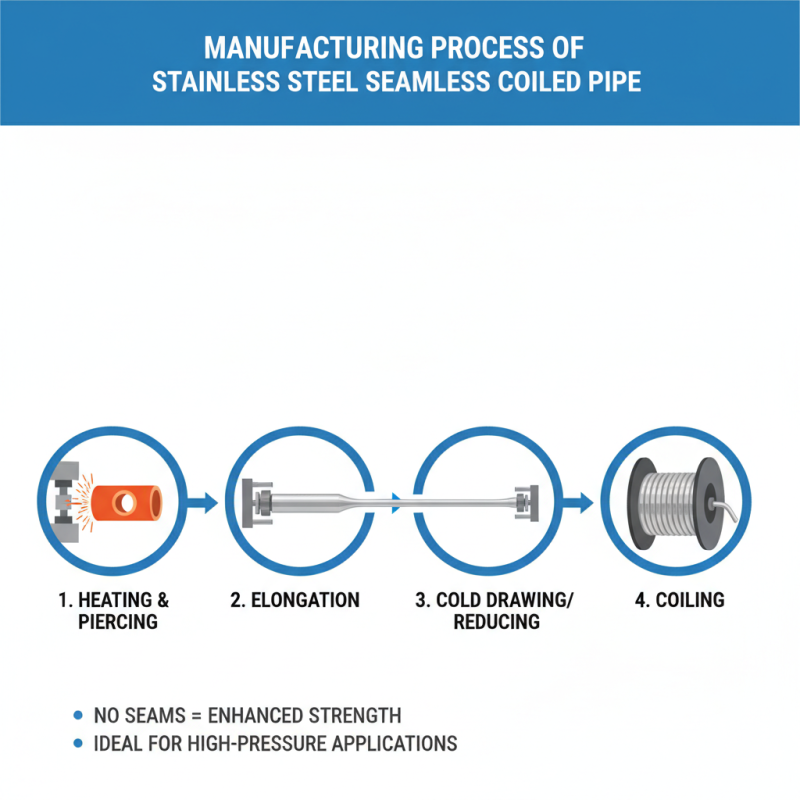
The manufacturing process of stainless steel seamless coiled pipe involves several key steps. Initially, high-quality stainless steel billets are heated and pierced to form a hollow tube. This is followed by elongation, where the tube is stretched to achieve specific diameters and lengths. The absence of seams in this process enhances the pipe’s strength, making it suitable for high-pressure applications.
According to a recent industry report, seamless pipes tend to have superior mechanical properties compared to welded ones. They can withstand extreme temperatures and pressures, which is critical in industries such as oil and gas. The seamless coiled pipes are often used in heat exchangers and boiler applications due to their corrosion resistance. Furthermore, standardized tests indicate that these pipes have around 20% more tensile strength than welded alternatives.
However, the manufacturing process is not without challenges. The initial costs can be higher due to material waste and energy consumption. Quality control must be stringent to avoid defects that can compromise durability. Additionally, variations in production techniques can lead to inconsistencies. This involves continuous reflection on best practices to maintain quality while managing costs. Always, manufacturers must find a balance between efficiency and reliability in their production processes.
Comparative Analysis with Other Types of Pipes
Stainless steel seamless coiled pipes are commonly used in various industries, including oil and gas, chemical processing, and pharmaceuticals. Their durability and resistance to corrosion make them suitable for transporting fluids and gases under high pressure. Unlike welded pipes, seamless pipes provide a more reliable option where strength and integrity are paramount.
When comparing stainless steel seamless pipes with welded and other types of pipes, several factors come into play. Seamless pipes have no seams, reducing the risk of leaks or weak points. They can withstand extreme temperatures and pressures, making them ideal for critical applications. On the other hand, welded pipes may be less expensive and easier to produce but can have weaknesses at the joints.
Tips: When selecting pipes, consider the specific requirements of your project, such as pressure ratings and material compatibility. Pay attention to the installation process; improper handling can lead to future issues. Finally, always perform quality checks on the pipes to ensure they meet your project’s standards.
Maintenance and Durability of Stainless Steel Seamless Coiled Pipe
Stainless steel seamless coiled pipes are known for their durability and low maintenance requirements. They are widely used across various industries, including construction, oil and gas, and food processing. According to a report by Grand View Research, the global seamless pipe market is projected to reach USD 80.5 billion by 2025, underscoring their importance in modern infrastructure.
The maintenance of these pipes is relatively straightforward. Regular inspections are essential to detect any potential corrosion. Stainless steel is designed to resist rust, but it is not entirely immune. In certain environments, like marine or high-chloride areas, corrosion can still occur. Using proper protective coatings can significantly extend the lifespan of these pipes, reducing the likelihood of premature failures.
Durability is a defining feature of stainless steel seamless coiled pipes. They maintain their structural integrity under varying temperatures and pressure levels. However, it’s crucial to acknowledge that installation practices play a major role in their performance. Poor installation can lead to stress points that compromise durability. Proper training and adherence to best practices are essential for maximizing the benefits of stainless steel seamless pipes.