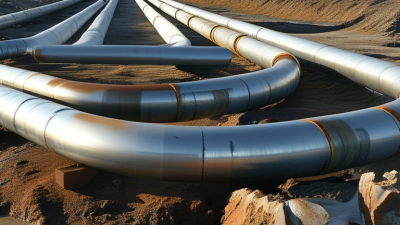
China has become a major manufacturing hub for stainless steel coil tubing. Its suppliers serve heat exchangers, instrumentation systems, boilers, hydraulic lines, and process equipment worldwide. This guide introduces leading Stainless Steel Coil Tube Companies and explains what separates a dependable producer from a promising listing.
The comparison considers practical manufacturing details. These include stainless steel grades, outside diameter, wall thickness, coil length, surface finish, and dimensional tolerance. Common materials include 304, 316L, 321, and duplex stainless steel. Both welded and seamless options may be available. Relevant standards, such as ASTM A213 and ASTM A269, can help buyers assess suitability. However, a standard alone does not prove consistent quality.
Details matter. Evidence matters more.
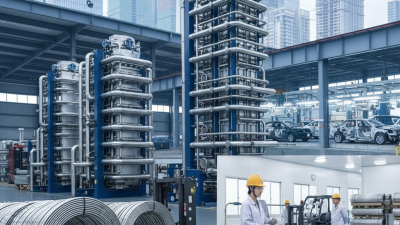
Reliable companies should provide traceable mill certificates, chemical analysis, mechanical test results, and inspection records. Buyers may also review eddy-current testing, hydrostatic testing, weld inspection, and PMI procedures. Factory photos can show coiling machines, polishing lines, packing methods, and storage conditions. A clean workshop is useful evidence, but it is not a complete quality assessment.
Experience also matters during export. Packaging must protect long coils from moisture, impact, and deformation. Communication should remain clear about tolerances, sample approval, production schedules, and after-sales support. Online company profiles can look polished, while actual capacity may differ. That deserves caution. This article therefore compares manufacturers through publicly available information and practical purchasing criteria. It does not treat company size as a guarantee. A supplier suitable for a small instrumentation order may not meet the demands of a large industrial project. The final decision still requires technical verification, documented testing, and direct communication with the manufacturer.
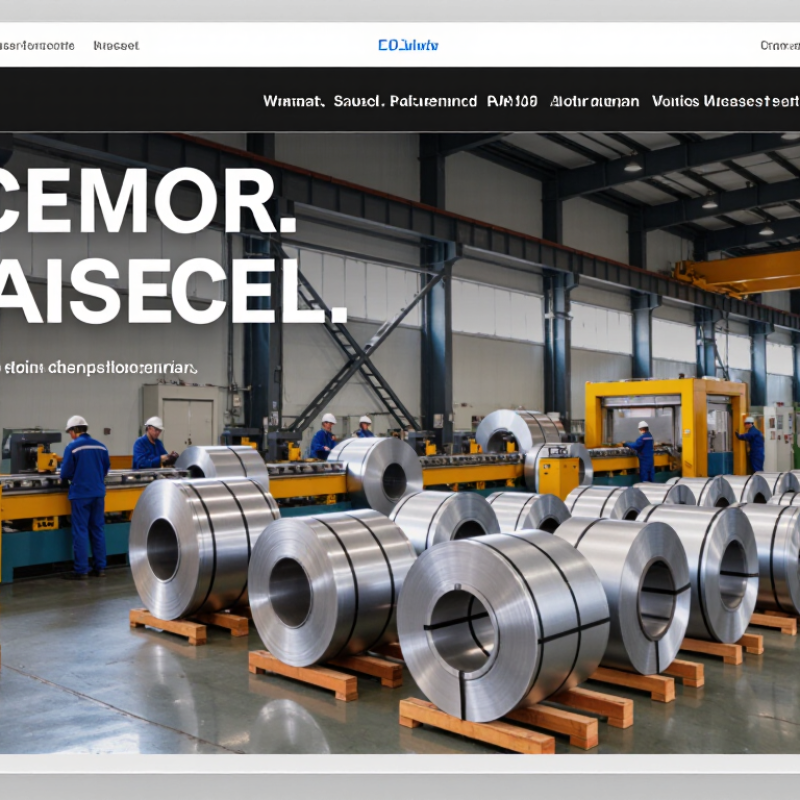
China’s stainless steel coil tube industry remained active in 2024, supported by energy equipment, heat exchangers, food processing, and industrial fabrication. Domestic mills supplied both standard and customized tubing, including thin-wall coils, high-pressure designs, and corrosion-resistant grades. Production decisions often depended on nickel prices, electricity costs, and delivery requirements.
Export data for 2024 showed continued shipments to Southeast Asia, the Middle East, Europe, and North America. However, public customs records rarely isolate stainless steel coil tubes as a separate product category. They may group coils with other welded or seamless tubing. This makes exact market-size comparisons difficult. Export values should be treated as directional, not absolute.
Experienced buyers usually examine more than price. They review material certificates, outer-diameter tolerance, wall thickness, coil length, surface finish, and pressure-test records. Reliable suppliers can explain heat numbers and maintain traceability from raw strip to finished coil. Packaging also matters. Wooden supports, moisture barriers, and capped ends reduce deformation during ocean transport.
Quality still varies.
Some exporters offer attractive quotations but provide limited inspection evidence. That weakness deserves attention. Buyers should request sample testing, production photographs, and independent inspection when specifications are critical. China’s 2024 export performance looked strong, yet freight volatility, compliance checks, and inconsistent classification created uncertainty. These details can change the real cost after arrival.
Chinese coil tube manufacturers are often evaluated by their control of ASTM requirements, not production volume alone. ASTM A269 covers seamless and welded austenitic stainless steel tubing for general service. It emphasizes dimensional accuracy, mechanical properties, and pressure integrity. A213 is designed for seamless boiler, superheater, and heat exchanger tubes. It demands tighter control during heat treatment and testing. ASTM A789 applies to seamless and welded ferritic and austenitic stainless steel tubing, including duplex grades used in demanding service.
Tips: Ask for the exact standard, grade, wall thickness, and delivery condition. Review heat numbers, mill test certificates, and coil length records. Request hydrostatic or nondestructive testing details. Small gaps matter. A certificate without traceability is weak evidence.
Reliable suppliers should explain how they prevent ovality, surface scratches, and residual stress during coiling. A practical inspection may include outer diameter checks, wall-thickness mapping, hardness testing, and visual examination under controlled lighting. For welded coils, buyers should also verify weld quality and heat-treatment records. Packaging deserves attention. Protective caps, dry wrapping, and a stable coil frame can prevent damage during long transport.
No supplier gets every detail right. A capable manufacturer should admit process limits and propose corrective actions. Production records should connect raw material, forming, testing, and final packing. That connection supports dependable selection among China’s leading coil tube companies.
China is a major stainless steel production center. The International Stainless Steel Forum reported about 36.7 million tonnes of Chinese crude stainless production in 2023. That represented nearly 63% of global output. This scale supports extensive coil tube manufacturing. However, capacity is not the same as proven delivery performance.
Leading Chinese manufacturers usually supply 304 and 316L coil tubes for heat exchangers, instrumentation, and chemical service. Duplex 2205 is also available for chloride exposure and higher mechanical strength. ASTM A269 commonly supports general stainless tubing requirements. ASTM A789 is more relevant to ferritic and duplex tubing. Experienced buyers should request production capacity by grade, diameter, wall thickness, and monthly output. A factory’s melting capacity may not equal its tube-forming capacity. That distinction is easy to miss.
Tips: Ask for recent EN 10204 3.1 certificates, PMI records, eddy-current results, and hydrostatic test data. Confirm whether tubes are welded or seamless. Check 316L molybdenum content carefully. For duplex grades, request solution-annealing records and ferrite testing. Public industry reports often combine several product categories. Therefore, published capacity figures need independent verification. In practice, sample inspection can reveal surface waviness, uneven polishing, or inconsistent coiling. These small details matter during installation.
Top Stainless Steel Coil Tube Companies in China
When evaluating stainless steel coil tube suppliers in China, quality starts with measurable geometry. Outer diameter affects installation, flow, and connection reliability. Ask for dimensional records from the production line, not only a final certificate. Laser gauges can monitor diameter continuously, while calibrated micrometers verify selected coils. A small ovality issue may become serious during uncoiling or bending.
Wall thickness deserves equal attention. Uneven thickness can reduce pressure performance and create weak areas near formed sections. Reliable manufacturers inspect samples across the strip width and along the coil length. Request tolerance data, heat numbers, and material certificates that match the actual batch. Standards such as ASTM A269 or project-specific requirements should be clearly stated. Do not accept “standard quality” as a technical description.
Eddy-current testing helps detect cracks, pinholes, laps, and other discontinuities without cutting the tube. The test settings must suit the alloy, diameter, and wall thickness. Ask whether the system is calibrated with certified reference notches before production and after interruptions. A test report without calibration details is incomplete. In supplier audits, I also compare eddy-current results with visual checks and hydrostatic testing. They do not replace each other. One practical weakness remains: inspection samples may miss defects between tested points. Continuous testing reduces that risk, but operators still need documented responses when alarms occur.
Representative industry specification examples for coil tubing: outer diameter (OD), wall thickness (WT), and eddy-current testing (ECT) coverage. Values are reference ranges and inspection practices, not company-specific data.
Typical tube sizes shown are 6–12 mm OD with 0.5–1.2 mm wall thickness. OD tolerance is represented in millimetres, WT tolerance in percentage, and ECT as inspection coverage.
Top Stainless Steel Coil Tube Companies in China
Supplier comparison should begin with MOQ, not brochure language. For standard stainless steel coil tubing, many Chinese suppliers accept 300–1,000 kilograms per size. Custom wall thicknesses may require more. A low MOQ sounds attractive, but it can increase setup costs and reduce price stability. Ask whether the quoted MOQ applies to one grade, one size, or the whole order.
Lead time commonly ranges from 20 to 45 days after deposit and drawing approval. Production schedules become longer when bright annealing, precision welding, or special coiling is required. Request a dated production plan, not only a verbal promise. Before shipment, check mill test certificates, chemical analysis, dimensional reports, and surface inspection records. ISO 9001 supports process control, while ASTM, EN, or customer-specific standards confirm technical suitability. Certification alone is not proof of consistent quality.
Export experience matters when tubing crosses different climate and documentation systems. Established suppliers often serve Southeast Asia, Europe, North America, the Middle East, and South America. Look for moisture-resistant packing, coil identification tags, export-grade wooden cases, and clear HS-code guidance. Video inspections can reveal winding marks, uneven edges, or poor labeling. They are useful, but not perfect. One overlooked detail is after-sales response: a supplier may ship quickly yet answer slowly when a tolerance issue appears. Evaluate references, sample results, and payment terms together. Costs hide in details.
| Supplier Profile | Typical Product Range | Common Stainless Steel Grades | Minimum Order Quantity | Standard Lead Time | Surface and Dimensional Capability | Common Certifications and Documents | Typical Export Markets | Best-Fit Application |
|---|---|---|---|---|---|---|---|---|
| Profile A | Seamless and welded stainless steel coil tubing for heat exchangers, instrumentation, and fluid transfer | 304/304L 316/316L 321 | 500–1,000 kg for standard sizes; custom sizes usually quoted per project | 25–40 days after drawing and material approval | Bright annealed, pickled, or polished surfaces; standard outer diameters commonly from 3 mm to 25.4 mm | ISO 9001 quality system; EN 10204 3.1 material certificates; chemical and mechanical test reports; dimensional inspection records | North America, Western Europe, Southeast Asia, the Middle East, and Australia | General industrial equipment, instrumentation lines, and process piping |
| Profile B | Long-length welded coil tubing and capillary tubing for compact equipment and control systems | 304L 316L 904L | 300–800 kg for regular products; trial orders may be accepted for qualified buyers | 20–35 days for standard grades; 35–55 days for nickel-alloy or special-grade materials | Controlled ovality and wall thickness; annealed, bright annealed, or electropolished options; coil lengths based on application requirements | ISO 9001; ISO 14001 may be available; EN 10204 3.1 certificates; PMI, eddy-current, hydrostatic, and surface inspection reports when specified | Europe, South Korea, Japan, India, the Gulf region, and Latin America | Instrumentation, analytical systems, semiconductor support equipment, and clean fluid service |
| Profile C | Heavy-wall seamless coil tubing and high-pressure stainless steel tubing | 316/316L 317L 2205 | 1,000–2,000 kg, depending on wall thickness, grade, and testing requirements | 35–60 days, including production, testing, and final inspection | Higher wall-thickness options; pickled and passivated surfaces; available non-destructive testing for pressure-service applications | ISO 9001; EN 10204 3.1 or 3.2 documentation by agreement; hydrostatic testing; ultrasonic or eddy-current testing; PMI reports | Middle East, North Africa, Central Asia, Southeast Asia, and selected European markets | Oil and gas support systems, chemical processing, pressure instrumentation, and offshore equipment |
| Profile D | Small-diameter stainless steel capillary coils and precision tubing for medical and laboratory equipment | 304 316L 321 | 100–500 kg for catalog dimensions; prototype quantities subject to technical review | 30–45 days for production orders; sample preparation commonly takes 7–15 days | Precision outer-diameter control; fine-gauge wall options; bright annealed, polished, and cleaned surfaces; plastic or metal spool packaging | ISO 9001; material traceability records; EN 10204 3.1 certificates; cleanliness, roughness, and dimensional inspection reports | North America, Europe, Israel, Singapore, China, and other Asia-Pacific markets | Laboratory instruments, medical devices, sensors, and precision gas or liquid delivery |
| Profile E | Stainless steel heat-exchanger coils and formed tubing assemblies | 304/304L 316L 310S | 500–1,500 kg for tubing; assembly orders usually require a project-based quotation | 30–50 days for tubing; 45–70 days for formed or welded assemblies | Custom coil diameter, pitch, end connections, and tube length; pickled, passivated, or polished finish options | ISO 9001; EN 10204 3.1 certificates; welding procedure and welder qualification documents where applicable; pressure and leak-test reports | Europe, North America, Australia, Southeast Asia, and the Middle East | Water heating, refrigeration, HVAC, food processing, and general heat-transfer equipment |
| Profile F | Export-oriented stainless steel coil tubing with private-label packaging and project documentation support | 304/304L 316/316L 2205 | 1,000 kg for regular export orders; container-volume orders may offer improved pricing | 25–45 days for standard tubing; shipping schedule depends on destination and inspection requirements | Mill-finish, annealed, pickled, or polished options; wooden-case, steel-frame, and seaworthy export packing available | ISO 9001; EN 10204 3.1 certificates; certificate of origin; packing list; commercial invoice; third-party inspection available on request | United States, Canada, the United Kingdom, Germany, Poland, Turkey, Brazil, Mexico, and Southeast Asia | OEM procurement, distributors, engineering contractors, and recurring export programs |
13295445693