


How to Choose Stainless Steel Polishing Tube in 2026?
Choosing the right Stainless Steel Polishing Tube in 2026 requires more than comparing surface brightness or purchase prices. The tube must match its working environment, fabrication method, and expected service life. Food equipment, architectural railings, pharmaceutical systems, and marine projects demand different performance priorities. Appearance is not enough.
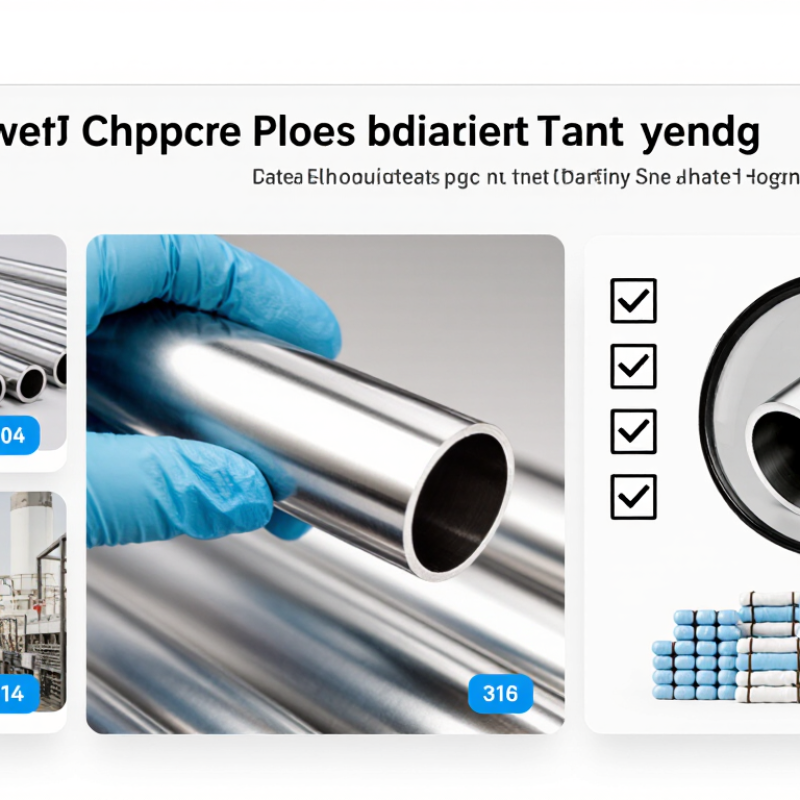
Experienced buyers usually begin with the stainless steel grade. Type 304 suits many indoor and mildly corrosive applications. Type 316 offers stronger resistance against chlorides, saltwater, and cleaning chemicals. Wall thickness also matters. A thin tube may look elegant but deform during welding or installation. Measure twice. Confirm the outside diameter, tolerance, length, and connection requirements before ordering.
Polishing quality deserves careful inspection. A mirror finish should appear even, without deep scratches, cloudy patches, burn marks, or visible weld discoloration. However, a highly reflective surface can hide small dents under warehouse lighting. Request close-up photographs, inspection records, and sample pieces when possible. Reliable suppliers should explain their polishing process, abrasive sequence, surface roughness, and packaging protection. Standards such as ASTM, EN, or project-specific specifications may guide acceptance, but they do not replace practical inspection. No checklist is perfect.
Material certificates, traceability records, and corrosion considerations strengthen purchasing decisions. Ask whether the tube was mechanically polished, chemically treated, or both. Consider how the surface will be cleaned after installation. A beautiful finish that collects residue around a rough weld is a poor long-term choice. This guide examines the details that influence value, safety, and durability, while acknowledging one uncomfortable truth: the cheapest polished tube can become the most expensive option after rework, staining, or premature replacement.
Define the Purpose and Performance Needs of the Polishing Tube
How to Choose Stainless Steel Polishing Tube in 2026?
Define the Purpose and Performance Needs of the Polishing Tube
Start with the tube’s working environment, not its shine. Will it carry clean water, food ingredients, chemicals, or compressed air? Each service demands different corrosion resistance, weld quality, wall thickness, and surface finish. World Stainless reported global crude stainless steel production of 58.4 million tonnes in 2023, showing the scale of this material market. Yet volume does not guarantee suitability. A polished tube for a beverage line may need a hygienic internal finish, while a decorative handrail mainly needs consistent appearance and scratch resistance.
Specify measurable requirements before requesting quotations. For hygienic systems, ASTM A270 covers stainless sanitary tubing, while ASME BPE provides guidance for bioprocess equipment surfaces and fabrication. Ask for the grade, actual wall thickness, ovality tolerance, weld treatment, and internal roughness value. Ra matters. A bright exterior can hide rough weld zones inside. In practical inspections, a flashlight and fingertip reveal little; a calibrated roughness instrument provides stronger evidence. Many purchasers still choose a mirror finish automatically. That is not always wise. Excessive polishing may remove material unevenly and increase cost without improving service life. Define cleaning chemicals, operating temperature, pressure, and inspection frequency. Leave room for doubt. The cheapest polished tube may become the most expensive replacement.
How to Choose Stainless Steel Polishing Tube in 2026? - Define the Purpose and Performance Needs of the Polishing Tube
| Purpose or Service Condition | Recommended Grade | Suitable Surface Finish | Typical Roughness Target (Ra) | Key Performance Requirement | Typical Size Considerations | Recommended Inspection Data | Selection Notes |
|---|---|---|---|---|---|---|---|
| General indoor architectural tubing | 304 or 304L | No. 4 brushed, satin, or polished decorative finish | Typically about 0.4–1.0 μm, depending on the specified finish | Appearance consistency, corrosion resistance in normal indoor environments, and dimensional stability | Common round tube outside diameters range from approximately 12 to 101.6 mm; wall thickness must be matched to the structural load | Outside diameter, wall thickness, straightness, surface uniformity, weld condition, and visual color consistency | 304 is generally suitable for ordinary interior applications. Specify a protective film when the polished surface will be exposed to handling or transport. |
| Food, beverage, and sanitary conveying | 304L for most products; 316L for higher chloride exposure | Bright annealed, hygienic polish, or mechanically polished internal and external surfaces | Common hygienic targets are Ra ≤ 0.8 μm; some processes require Ra ≤ 0.4 μm | Cleanability, low particle retention, corrosion resistance, and smooth internal flow path | Tube dimensions should be selected according to flow rate, pressure, cleaning method, and connection standard | Internal and external Ra, internal weld profile, pickling/passivation status, dimensional tolerance, and cleanliness | Internal surface quality is often more important than mirror appearance. Confirm whether the roughness value applies to the base material, weld area, or finished bore. |
| Marine, coastal, and chloride-containing environments | 316L | Polished, satin, or bright finish with fully cleaned surface | Typically about 0.4–1.0 μm for decorative or functional polished surfaces | Resistance to chloride-related pitting and crevice corrosion | Use sufficient wall thickness for mechanical loads, vibration, and possible corrosion allowance where required by the design | Grade verification, chemical composition, pitting-sensitive surface defects, weld discoloration, passivation, and salt-contamination control | 316L contains molybdenum and generally provides better chloride resistance than 304L. It is not immune to corrosion in stagnant seawater or severe crevices. |
| High-temperature exhaust, furnace, or radiant-heat service | 321 or 310S, selected according to temperature and atmosphere | Mill finish, heat-resistant polished finish, or controlled bright finish | Usually specified for surface condition and oxidation control rather than ultra-low roughness | Elevated-temperature strength, oxidation resistance, thermal cycling performance, and dimensional stability | Wall thickness must account for temperature-dependent strength, thermal expansion, support spacing, and buckling risk | Material certificate, high-temperature design data, wall thickness, ovality, weld quality, and heat-treatment condition | 321 is stabilized with titanium and is commonly considered for elevated-temperature service. 310S has high chromium and nickel content and is used for more demanding oxidation conditions. |
| Hydraulic, pneumatic, and precision fluid lines | 304L or 316L, depending on fluid chemistry | Cold-drawn, bright annealed, or internally polished finish | Often specified around Ra 0.4–0.8 μm for smooth fluid passage | Pressure containment, dimensional accuracy, low leakage risk, and clean internal bore | Outside diameter, wall thickness, concentricity, ovality, and pressure rating must be selected together | Hydrostatic or pneumatic test, eddy-current or ultrasonic testing where required, dimensional inspection, and internal cleanliness | Do not select by surface appearance alone. Pressure design should consider material strength, temperature, corrosion, tube support, and applicable design codes. |
| Pharmaceutical, biotechnology, and high-purity processing | 316L is commonly selected | Electropolished or mechanically polished hygienic finish | Common targets include Ra ≤ 0.4 μm; project specifications may be more stringent | Low contamination risk, cleanability, drainability, corrosion resistance, and controlled surface chemistry | Use sanitary tube dimensions and orbital-welding compatibility appropriate to the process system | Ra mapping, internal weld inspection, passivation or electropolishing records, material traceability, cleanliness, and end protection | Define the measurement method, sampling location, and whether the requirement applies to the parent tube, weld bead, heat-affected zone, and fittings. |
| Decorative mirror surfaces and visible furniture components | 304 or 316L, based on the environment | 8K mirror or equivalent high-reflectivity polished finish | Often approximately 0.05–0.2 μm, but the final value depends on polishing process and inspection method | Reflectivity, scratch resistance, uniform appearance, and freedom from grinding lines or haze | Specify tube diameter, wall thickness, allowable dents, straightness, and end finishing before polishing | Visual inspection under defined lighting, reflectivity or gloss assessment, surface roughness, dimensional inspection, and protective-film condition | “Mirror” is an appearance description rather than a universal roughness grade. Establish an approved reference sample or measurable acceptance criteria. |
| Structural handrails, guards, and public-access assemblies | 304L for normal environments; 316L for coastal or de-icing-salt exposure | No. 4 satin, brushed, or fine polished finish | Typically about 0.4–1.0 μm for a controlled decorative finish | Impact resistance, safe edges, weld appearance, corrosion resistance, and ease of maintenance | Tube diameter and wall thickness must comply with the applicable structural and guardrail requirements | Dimensional tolerance, weld penetration, surface defects, edge condition, load-test documentation where required, and passivation | Choose a finish that hides minor handling marks and is practical to maintain. Avoid sharp edges and unblended welds in user-contact areas. |
| High-cleanliness gas or vacuum lines | 316L, often with controlled sulfur content for orbital welding | Bright annealed or electropolished internal surface | Common targets range from Ra ≤ 0.4 μm to Ra ≤ 0.25 μm, depending on system purity | Low outgassing, low particle generation, leak tightness, weld repeatability, and internal cleanliness | Tube size is determined by flow, pressure, conductance, connection type, and allowable gas velocity | Helium leak testing where applicable, surface roughness, particle or cleanliness certification, orbital-weld records, and end-cap integrity | Specify packaging, capped ends, cleaning method, weld purge requirements, and acceptance limits before ordering. |
| Outdoor equipment exposed to rain and industrial atmosphere | 304L for moderate exposure; 316L for coastal, chemical, or salt-contaminated locations | Satin, brushed, or polished finish with passivated surface | Typically about 0.4–1.0 μm for visible finished tubing | Atmospheric corrosion resistance, UV-stable protection during storage, and maintainable appearance | Allow for drainage, thermal expansion, mounting loads, and avoidance of water-trapping crevices | Grade and heat traceability, surface contamination, weld discoloration, passivation, dimensional checks, and coating or film condition | Surface finish alone does not determine outdoor durability. Design details, drainage, cleaning frequency, and exposure to chlorides are equally important. |
Specification reminder: Final selection should confirm the stainless steel grade, outside diameter, wall thickness, manufacturing method, surface finish, roughness measurement method, dimensional tolerance, weld requirements, passivation, inspection documents, packaging, and applicable standard. Roughness values shown above are typical engineering targets and should be verified against the project specification.
Related Posts
-
Top 10 Benefits of Using 304l Steel Pipe in Construction and Manufacturing?
-
China Top 10 304 Steel Tube Suppliers for Global Buyers
-
How to Choose the Best Stainless Steel Coil Tube Companies?
-
Why Choose ASTM A269 316 Coiled Pipe for Your Next Project?
-
Top 5 ASTM A269 316 Coiled Pipe Suppliers You Need to Know?
-
Top 10 Seamless Stainless Steel Pipes You Need to Buy Now?
-

Phone
-

E-mail
-

Whatsapp
-

WeChat
WeChat
13295445693
-

Top