


What Is 304 Seamless Steel Tube Used For?
304 Seamless Steel Tube serves demanding systems where cleanliness, corrosion resistance, and pressure integrity matter. Its chromium-nickel austenitic structure supports reliable performance in many industrial environments. Typical applications include chemical processing, food and beverage plants, pharmaceutical utilities, heat exchangers, and high-temperature piping. The absence of a welded seam can reduce concerns about weld-related weak points. However, it does not make the tube automatically superior.
Industry data shows why stainless materials remain important. The World Steel Association reported approximately 1.89 billion tonnes of crude steel production in 2023. The International Stainless Steel Forum recorded about 58.4 million tonnes of stainless steel production during the same year. These figures do not describe 304 tube demand directly. They do show a large and continuing industrial material base.
ASTM A312 commonly covers seamless and welded austenitic stainless steel pipe for corrosive and high-temperature service. Engineers still need to verify pressure, temperature, chemistry, wall thickness, and fabrication requirements. A bright tube in a clean processing room may look ideal. Yet chloride exposure can cause localized corrosion if the grade and maintenance plan are poorly matched. This is often overlooked.
304 Seamless Steel Tube is therefore selected for balanced performance, not marketing language. It offers practical corrosion resistance, formability, and relatively straightforward fabrication. Nevertheless, 316 or another alloy may be more suitable near seawater or concentrated chlorides. Costs also matter. Seamless production can bring higher prices and tighter sourcing constraints. A responsible specification should compare service conditions, inspection records, certification, and lifecycle risk before approval.
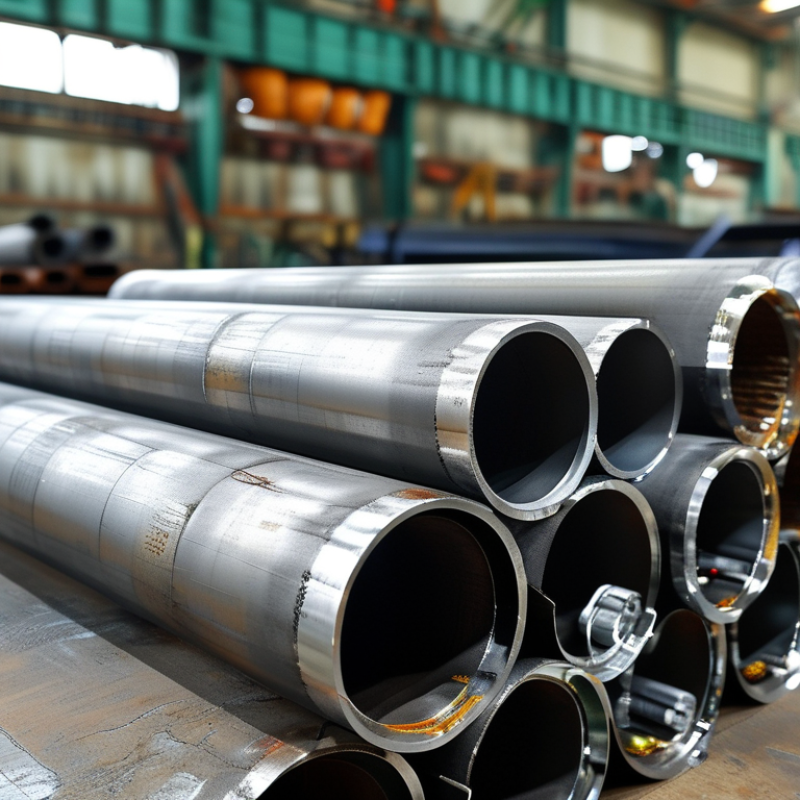
304 Stainless Steel Composition: 18% Chromium, 8% Nickel, and ≤0.08% Carbon
What Is 304 Seamless Steel Tube Used For?
304 Stainless Steel Composition: 18% Chromium, 8% Nickel, and ≤0.08% Carbon
304 seamless steel tube is widely used for conveying liquids, gases, and process materials. Its composition explains much of this performance. About 18% chromium forms a thin passive film on the surface. This film helps the tube resist rust in ordinary atmospheric and industrial conditions. The 8% nickel supports an austenitic structure, giving 304 good toughness, formability, and service stability. It remains practical in kitchens, food-processing lines, pharmaceutical equipment, heat exchangers, and architectural piping.
The carbon limit of ≤0.08% is also important. Lower carbon reduces the risk of chromium carbide formation during welding. That can help preserve corrosion resistance near welded areas. However, composition alone does not guarantee reliable service. Tube cleanliness, wall thickness, heat treatment, surface finish, and manufacturing quality still matter. A smooth internal surface helps reduce residue buildup. Seamless construction can also provide consistent pressure containment where welded joints may be less suitable.
In practical inspection work, checking the material certificate and positive material identification is wise. Hydrostatic or nondestructive testing may also be required for pressure applications. 304 performs poorly in some chloride-rich environments, especially warm seawater. That limitation is easy to overlook. For heavy chloride exposure, another stainless grade may be more appropriate. Even then, 304 remains a dependable choice for many moderate-duty systems when design conditions are controlled.
What Is 304 Seamless Steel Tube Used For? - 304 Stainless Steel Composition: 18% Chromium, 8% Nickel, and ≤0.08% Carbon
| Data Dimension | Typical Information | Why It Matters for 304 Seamless Tube |
|---|---|---|
| Material Grade | Austenitic stainless steel 304, commonly designated as UNS S30400 | Provides a widely used combination of corrosion resistance, formability, weldability, and strength. |
| Main Composition | Approximately 18% chromium, 8% nickel, and no more than 0.08% carbon; the balance is primarily iron. | Chromium forms a passive oxide layer, while nickel helps stabilize the austenitic structure and supports corrosion resistance. |
| Tube Manufacturing Method | Seamless tube is produced without a longitudinal welded seam, typically by piercing and working a solid billet. | The absence of a weld line can be useful where uniformity, pressure containment, and resistance to localized weld-related weaknesses are important. |
| General Corrosion Resistance | Good resistance to atmospheric corrosion, moisture, many organic chemicals, and a range of food-processing environments. | Suitable for general-purpose fluid handling, equipment fabrication, and indoor or outdoor service where chloride exposure is limited. |
| Chloride Exposure | Susceptible to pitting and crevice corrosion in high-chloride or marine environments. | 304 may not be the preferred choice for seawater, concentrated chlorides, or warm saline service; the operating environment should be evaluated before selection. |
| Temperature Capability | Maintains useful oxidation resistance in many elevated-temperature applications, but actual limits depend on atmosphere, stress, design, and applicable standards. | Used in heat-related equipment when the temperature and corrosion conditions remain within the design limits of the tube. |
| Mechanical Behavior | Non-magnetic in the annealed condition, with good ductility and work-hardening characteristics. | Supports forming and fabrication, although cold working may increase strength and produce some magnetic response. |
| Common Industrial Uses | Process piping, instrumentation lines, heat-exchanger components, pressure vessels, and general fluid-transfer systems. | Seamless construction is selected when a consistent tube wall and reliable service under internal pressure are required. |
| Food and Beverage Equipment | Transfer lines, sanitary equipment, storage components, mixing systems, and processing machinery. | The smooth, cleanable surface and resistance to many food-related media make 304 suitable for numerous hygienic applications. |
| Chemical Processing | Used for piping and components handling many mild chemicals, dilute organic solutions, and non-aggressive process fluids. | Compatibility must be checked against chemical concentration, temperature, pressure, and exposure time because 304 is not universally corrosion-proof. |
| Architectural and Structural Fabrication | Handrails, supports, frames, decorative tubing, and equipment structures in moderately corrosive environments. | Combines a clean metallic appearance with durability and relatively straightforward fabrication. |
| Automotive and Transportation | Exhaust-related components, tubing assemblies, structural details, and fluid-handling parts, depending on temperature and corrosion requirements. | Offers a practical balance of formability, corrosion resistance, and service durability for selected vehicle applications. |
| Typical Size Selection Factors | Outside diameter, wall thickness, length, pressure rating, temperature, flow rate, and applicable dimensional standard. | Correct sizing affects flow capacity, pressure containment, weight, installation compatibility, and service life. |
| Surface and Cleanliness | Surface condition may include annealed, pickled, polished, or mechanically finished tube, depending on the application. | Surface finish influences cleanability, appearance, friction, and resistance to contamination or surface corrosion. |
| Welding and Joining | 304 can generally be welded using common stainless-steel welding processes; post-weld treatment depends on service conditions. | Proper procedures help limit distortion, contamination, discoloration, and corrosion problems near fabricated joints. |
| Key Selection Limitation | Not ideal for severe chloride environments or applications requiring maximum resistance to localized corrosion. | Material selection should consider a higher-alloy stainless steel or another suitable material when chloride, acidity, temperature, or stress conditions are severe. |
Related Posts
-
2026 How to Choose Astm A269 304 Capillary Pipe for Your Needs?
-

2026 Top Trends in Stainless Steel Seamless Steel Pipe Industry?
-

Why Choose ASTM A269 316 Coiled Pipe for Your Next Project?
-
How to Choose the Best Stainless Steel Seamless Coiled Pipe?
-
China Best ASTM A269 304 Stainless Coil Pipe Suppliers?
-
Stainless Steel Seamless Steel Coiled Pipe Tips for Efficient Use?
-

Phone
-

E-mail
-

Whatsapp
-

WeChat
WeChat
13295445693
-

Top