Top Uses and Benefits of 304L Steel Pipe in Various Industries
In the world of industrial applications, 304L steel pipe stands out for its remarkable versatility. Industry expert John Smith emphasizes, “304L steel pipe is a game changer for many sectors.” This material is known for its excellent corrosion resistance and weldability. These features make it a preferred choice in construction, automotive, and chemical processing industries.
304L steel pipe is often utilized in environments where durability is key. For instance, it’s commonly found in high-salinity locations, where traditional materials may fail. Additionally, its lower carbon content enhances its formability and minimizes the risk of localized corrosion. Yet, while it presents many advantages, some challenges in sourcing quality 304L steel pipe remain.
The increasing demand for 304L steel pipe also raises questions about sustainability. Not all suppliers maintain ethical sourcing practices. Factors like these urge industries to carefully consider their suppliers. In this evolving landscape, it's crucial to balance performance benefits with responsible choices.
Overview of 304L Steel Pipe and Its Composition
304L steel pipe is a low carbon version of 304 stainless steel. This composition provides excellent corrosion resistance. It is composed of iron, chromium, and nickel. The lower carbon content makes it ideal for welding and fabrication. It resists stress corrosion cracking better than conventional steels.
Industries like oil and gas rely heavily on 304L steel pipes. These pipes can withstand high pressures and extreme conditions. They also perform well in environments with chlorides. However, not all applications are suitable for 304L. It may not be the best choice for acidic environments. Some applications might demand higher alloy content for better performance.
The versatility of 304L steel pipe makes it popular across sectors. It’s used in food processing, pharmaceuticals, and construction. Each industry has specific needs. While 304L offers many benefits, it’s important to evaluate its limitations. Selecting the right materials is crucial for safety and efficiency. Ongoing evaluation is necessary to ensure these pipes meet industry standards.
Key Properties of 304L Stainless Steel
304L stainless steel is known for its remarkable properties. It offers excellent corrosion resistance. This makes it ideal for various applications. The low carbon content helps in reducing carbide precipitation. This feature is crucial for welding applications.
Its mechanical properties are also impressive. 304L steel can withstand high temperatures and stresses. It maintains its strength at extreme temperatures. This versatility is valuable in many industries, from food processing to petrochemicals. Its ease of fabrication allows complex shapes. It can be molded into various dimensions without losing integrity.
Despite its benefits, there are considerations to reflect on. While 304L is robust, it is not totally immune to corrosion under certain conditions. This is something manufacturers must keep in mind. The limitations in some settings should prompt careful evaluation. Overall, 304L stainless steel remains a popular choice but requires thoughtful application.
Top Uses and Benefits of 304L Steel Pipe in Various Industries
| Industry |
Application |
Key Properties |
Benefits |
| Chemical Processing |
Pipelines and storage tanks |
Corrosion resistance, durability |
Longevity, reduced maintenance |
| Food and Beverage |
Processing equipment |
Hygienic properties, low reactivity |
Safety and high-quality standards |
| Oil and Gas |
Pipelines and offshore platforms |
High strength, resistance to pitting |
Enhanced safety and performance under pressure |
| Construction |
Structural supports and frames |
Tensile strength, weldability |
Versatility and cost-effectiveness |
| Pharmaceuticals |
Storage and transport of chemicals |
Non-reactive, easy to clean |
Compliance with regulatory standards |
Industrial Applications of 304L Steel Pipe
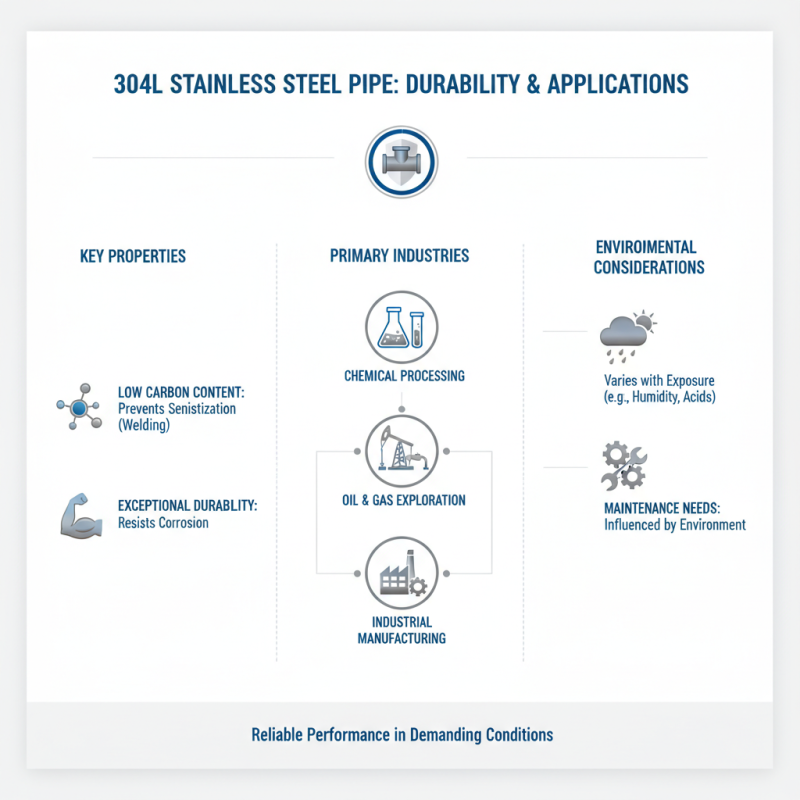
304L steel pipe serves diverse industrial applications due to its excellent corrosion resistance and strength. Commonly found in chemical processing, these pipes endure harsh conditions. Their low carbon content reduces the risk of carbide precipitation during welding. This feature makes 304L a preferred choice for industries that require strong welded joints.
In the oil and gas sector, 304L steel pipes play a crucial role. They are used in pipelines that transport corrosive fluids. These pipes ensure longevity, reducing the frequency of replacements. However, depending on the fluid’s properties, one must regularly inspect for maintenance needs.
**Tips:** Always consider the environment. Different conditions may require additional considerations for pipe selection. Monitor potential corrosion regularly for early detection of issues. Proper installation also plays a key role in the longevity of 304L steel pipes.
Top Uses and Benefits of 304L Steel Pipe in Various Industries
Advantages of Using 304L Steel in Construction and Manufacturing
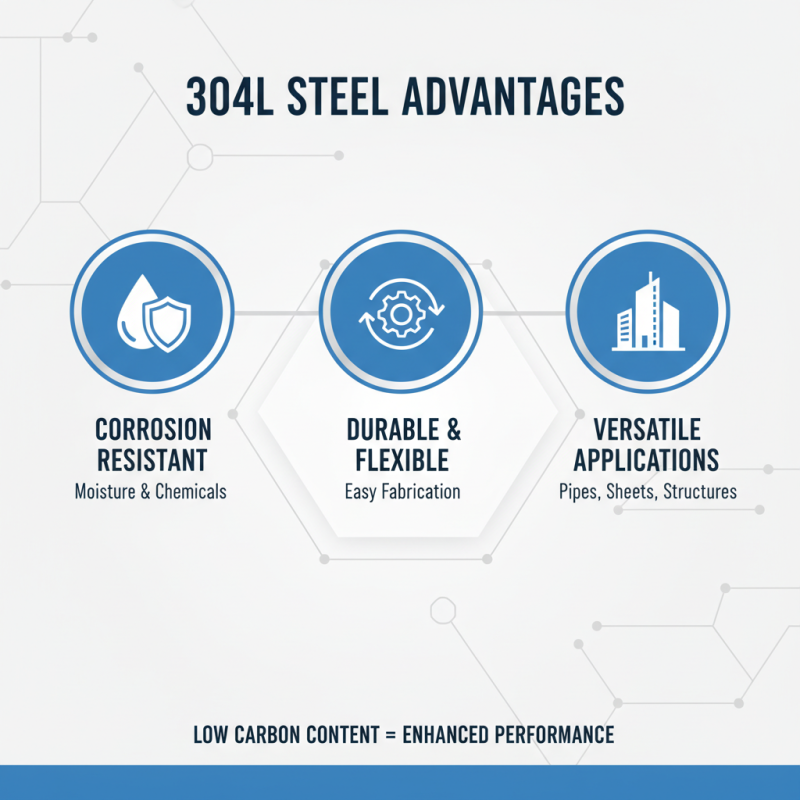
304L steel offers unique advantages in construction and manufacturing. Its low carbon content enhances corrosion resistance, making it ideal for various environments. Structures exposed to moisture or chemicals benefit significantly from this feature. The material is durable yet flexible, allowing easy fabrication into pipes, sheets, and more.
In manufacturing, 304L steel shines in producing food processing equipment. Its non-reactive surface ensures that food remains uncontaminated. However, maintaining cleanliness can be challenging in certain operations. The alloy also withstands high temperatures, showing resilience in applications like boilers or heat exchangers.
Despite its benefits, users should consider the risks. While 304L is resistant to oxidation, it can still corrode if not properly maintained. Regular inspections and proper cleaning are essential. Choosing 304L steel involves weighing its strengths against factors like cost and application requirements.
Maintenance and Durability of 304L Steel Pipe in Different Environments
304L steel pipe is known for its exceptional durability in various environments. It is commonly used in industries like chemicals, oil, and gas. Its low carbon content helps to avoid sensitization during welding and deployment. However, the environment plays a significant role in its maintenance needs.
In marine conditions, 304L steel pipe battles corrosion due to saltwater exposure. A 2021 report highlighted that stainless steel, including 304L, shows a corrosion rate of around 0.1 mm/year in these settings. Routine inspections are crucial as corrosion can still occur. Untreated corrosion can lead to structural failures.
Even in less aggressive environments, like food processing plants, 304L requires careful upkeep. The pipe must withstand cleaning agents that can be harsh. According to industry standards, regular maintenance checks can extend the lifespan of 304L pipes. It's not uncommon for users to overlook these details. Investing in preventative maintenance can prevent costly replacements later.