How to Choose Astm A269 304 Capillary Pipe for Your Project?
Choosing the right materials for a project is critical. In the world of piping, the Astm A269 304 Capillary Pipe stands out. With its excellent corrosion resistance and adaptability, it is a popular choice among engineers. But how do you know it's the right fit?
According to John Smith, a renowned expert in piping materials, "Selecting the right diameter of Astm A269 304 Capillary Pipe can enhance overall project performance." This emphasizes the importance of consideration in size and application. Capillary pipes are small, which can create challenges. Miscalculating the necessary specifications can lead to issues.
When deciding on the Astm A269 304 Capillary Pipe, think about your project's needs. Consider factors like operating temperature and pressure. Visualizing the environment where the pipe will be installed is essential. Each project is unique, and there is no one-size-fits-all solution. Take time to research and reflect on your specific requirements before making a choice.

Understanding ASTM A269 and Its Applications in Capillary Pipes
When selecting ASTM A269 304 capillary pipes, understanding their specifications is crucial. ASTM A269 outlines standards for seamless and welded pipes used in many industries. These pipes are typically made from stainless steel, which offers corrosion resistance and durability. Reports indicate that the global capillary pipe market will grow by 4.2% annually until 2028, reflecting increased demand in pharmaceutical and chemical applications.
Capillary pipes are favored for their small diameters, often under 1 inch. This size allows for precision fluid transfer, which is vital in medical devices and laboratory settings. The high strength-to-weight ratio of ASTM A269 304 stainless steel makes these pipes reliable under pressure. However, choosing the correct pipe can be challenging. Pipe thickness and length must fit the project’s specifications, which sometimes leads to discrepancies in performance.
Moreover, while ASTM A269 pipes excel in many applications, they are not universally perfect. In certain environments, high temperatures can pose a risk of deformation. Additionally, improper welding can lead to weak spots, making regular inspections essential. Awareness of these potential flaws will guide engineers and designers in making informed choices for their projects.
How to Choose ASTM A269 304 Capillary Pipe for Your Project?
| Dimension (Inches) |
Wall Thickness (Inches) |
Inner Diameter (Inches) |
Outer Diameter (Inches) |
Weight (lbs/ft) |
Application |
| 1/16 |
0.020 |
0.040 |
0.080 |
0.05 |
Pharmaceuticals |
| 1/8 |
0.035 |
0.095 |
0.165 |
0.10 |
Food Processing |
| 1/4 |
0.049 |
0.151 |
0.250 |
0.18 |
Chemical Handling |
| 3/8 |
0.065 |
0.250 |
0.350 |
0.26 |
Electronics |
| 1/2 |
0.083 |
0.250 |
0.413 |
0.33 |
Medical Equipment |
Key Properties of 304 Stainless Steel in Capillary Pipe Selection
When selecting ASTM A269 304 capillary pipe, it is essential to understand its key properties.
304 stainless steel is renowned for its excellent corrosion resistance.
It performs well in various environments, from industrial to marine applications.
The strength of 304 stainless steel is significant. Its tensile strength is around 70,000 psi. This makes it suitable for high-pressure situations.
However, it can be prone to pitting in certain conditions. Understanding the environment is crucial for effective use.
Tip: Always consider the application's specific needs. If you expect exposure to aggressive chemicals, evaluate the risks.
Another critical property is weldability. 304 stainless steel is easily welded. This feature allows for flexible designs in piping.
However, improper welding can lead to weak joints. Ensure proper techniques are employed.
Tip: Inspect welds carefully. Poor welding can compromise the integrity of the capillary pipe.
Lastly, 304 stainless steel has an attractive finish. This aesthetic appeal is often a deciding factor.
Yet, note that it can scratch. Consider how important appearance is for your project.
Factors to Consider When Choosing Capillary Pipe for Your Project
Choosing the right ASTM A269 304 capillary pipe requires careful consideration of several factors. The pipe's diameter and wall thickness can significantly impact flow rates and efficiency. Smaller diameters tend to be more restrictive, which may not be suitable for all applications. Reflect on the requirements of your system and how the pipe's specifications align with them.
Material compatibility is another critical factor. ASTM A269 304 stainless steel is known for its corrosion resistance. However, it may not be the best option for extremely corrosive environments. Evaluate the chemicals and conditions the pipe will face. It’s essential to think about the long-term durability and potential maintenance challenges.
Additionally, consider the pipe length and bending radius. Longer pipes may lead to pressure drops. If your project requires bends, ensure the radius is appropriate. Some designs may not accommodate tight bends effectively. Understanding the details of your project will guide you toward the right choice. Careful assessment of all these elements will help you choose an effective capillary pipe for your needs.
Comparison of Factors Affecting Astm A269 304 Capillary Pipe Selection
Comparing ASTM A269 with Other Standards for Capillary Pipes
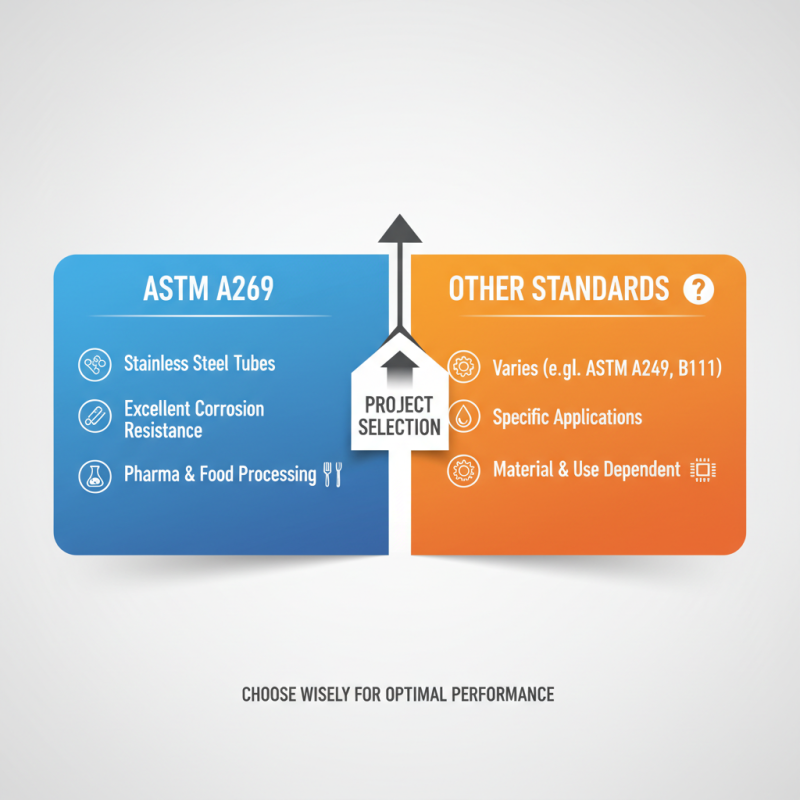
When selecting a capillary pipe for your project, you may consider ASTM A269 among other standards. ASTM A269 is designed for stainless steel tubes, offering excellent corrosion resistance. It’s commonly used in various industries, including pharmaceuticals and food processing. However, comparing ASTM A269 with other standards is essential for specific applications.
Standards like ASTM A213 are also worth examining. Although ASTM A213 focuses on seamless tubes, it may not always meet your project requirements. The choice between A269 and A213 revolves around intended use and environmental conditions. You may need to reflect on which properties matter most for your project. The same applies to comparing with other materials, such as copper or plastic, which may have different stress tolerances and temperature limits.
Pay attention to the mechanical properties detailed in each standard. While ASTM A269 emphasizes dimensions and tolerances, other standards might address different factors. This can directly impact your project’s durability and performance. Use this information to make an informed choice, but be open to re-evaluating your decision as your project evolves. Notice how each option could affect your project in unexpected ways, leading to potential challenges down the line.
Best Practices for Sourcing and Installing ASTM A269 304 Capillary Pipes
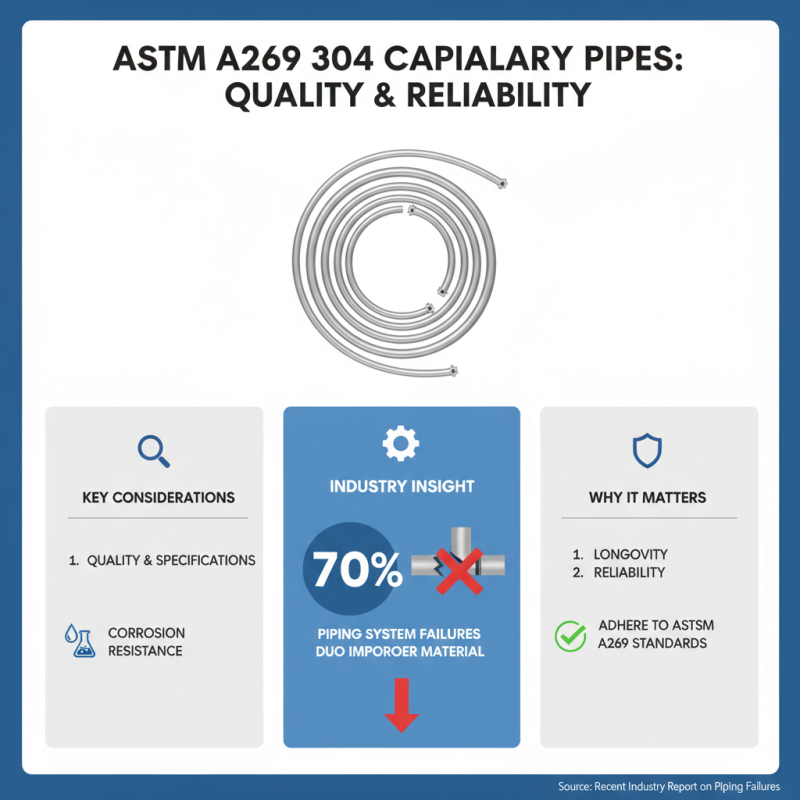
When sourcing ASTM A269 304 capillary pipes, it’s crucial to consider quality and specifications. This standard specifies pipes that are ideal for applications requiring corrosion resistance. A recent industry report noted that around 70% of failures in piping systems stem from improper material choices. Thus, sticking to ASTM A269 specifications is vital for ensuring longevity and reliability.
Installation practices also play a significant role. Ensure pipes are correctly aligned and securely fastened to prevent leaks. Studies show that poor installation can lead to early failures, with up to 30% of installed systems needing repairs within the first year. While some may overlook the importance of proper sealing, minor leaks can escalate into major issues. Regular inspections should not be ignored; they help in identifying potential risks before they become significant problems.
Finally, sourcing from reliable suppliers can impact project outcomes. While cost is essential, quality must not be sacrificed. The latest reports suggest that investing in higher-quality materials can reduce maintenance costs by 25% over a project’s lifecycle. Keep these aspects in mind as you navigate your project, and recognize that careful sourcing and installation can significantly influence success.